
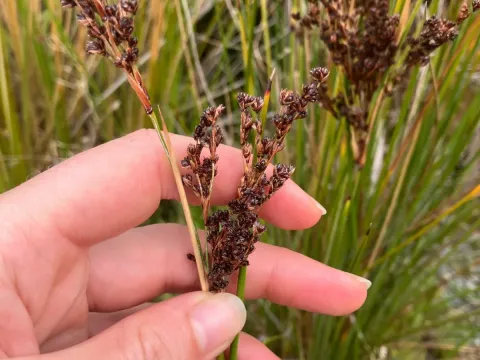
Sea rush
Juncus kraussii
Sea rush (Juncus kraussii) is a perennial rhizomatous herb belonging to the Juncaceae family. It is a highly resilient species, adapted to thrive in saline environments and coastal wetlands, making it a valuable biological resource for coastal management.
What the section contains
Sea rush
Native to the Southern Hemisphere, particularly regions in South Africa and Australia, the plant is naturally distributed along estuaries and salt marshes. Its ability to tolerate high salinity levels distinguishes it from many other wetland species utilized in land reclamation.
The plant requires moist, well-draining soils with consistent exposure to sunlight. While it can withstand periodic inundation, it is sensitive to prolonged water stagnation that limits oxygen availability in the root zone, requiring careful site selection.
Cultivation practices involve regular monitoring of soil moisture and salinity levels. To maximize the biomass production, it is essential to ensure adequate space between plants during the establishment phase, allowing the rhizomes to spread effectively.
Its primary economic and ecological utility lies in soil stabilization and erosion control. Due to its dense root system, sea rush is widely used in phytoremediation projects, as it effectively assists in filtering runoff water and reclaiming degraded coastal salt marshes.
The most common health issues involve fungal pathogens affecting the foliage when air circulation is poor or humidity remains excessively high for extended periods. Maintaining proper plant spacing helps to mitigate these risks significantly.
Pest threats include specific leaf-mining insects and occasionally sucking pests that target the younger shoots. Integrated pest management strategies, focusing on biological balance, are generally effective in maintaining healthy stands without heavy chemical input.