
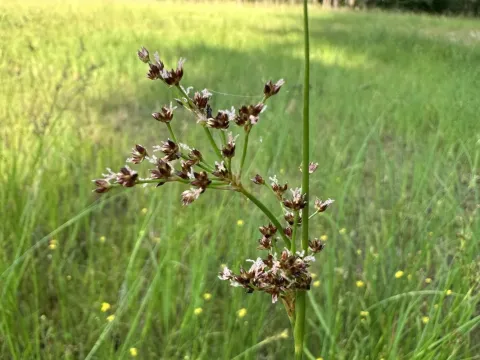
Sharp-flowered rush
Juncus acutiflorus
Sharp-flowered rush (Juncus acutiflorus) is a perennial herbaceous plant belonging to the Juncaceae family. It is native to temperate regions of Europe and parts of Africa, typically found in marshes, bogs, and waterlogged meadows.
What the section contains
Sharp-flowered rush
The plant has specific soil and moisture requirements. It thrives in acidic peat soils and wetlands where the water table is high throughout the growing season, making it an ideal candidate for restoring degraded wet habitats.
Botanically, it is distinguished by its creeping rhizomes and erect, smooth stems. These features enable the plant to persist in areas subject to periodic flooding, where standard agricultural crops would suffer from root rot due to lack of oxygen.
Climate adaptability is one of its key strengths, as it demonstrates significant tolerance to cold winters and cool, humid summers. It requires ample sunlight to reach peak biomass production, though it can survive in partial shade.
Regarding its utility, the Sharp-flowered rush is used primarily in sustainable land management. In agricultural settings, it serves as a roughage source for livestock when integrated into managed wet pasture systems.
Sharp-flowered rush is characterized by a high degree of natural resistance to most agricultural pests. The chemical composition of the plant, including tannins and silica content in the stems, makes it unpalatable to many insects.
Disease pressures are generally low unless the site experiences extreme stagnation of water. Fungal pathogens, such as rusts, can emerge during periods of high humidity and poor air circulation within the stand.
Management practices, such as annual mowing and the removal of dead organic material, are the most effective ways to maintain the health of the crop and reduce the risk of pathogen build-up.
While occasional infestations of soil-borne pests or larvae can occur, they rarely reach economic injury levels that would justify the use of chemical interventions in a meadow environment.
The key to successful cultivation is avoiding long-term total submersion if the water is stagnant, and ensuring that there is some level of nutrient circulation in the soil to prevent the development of anaerobic conditions.