
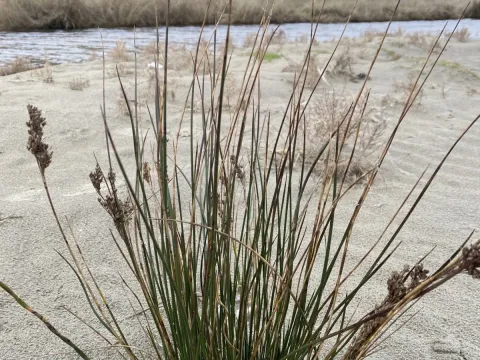
Sea rush
Juncus maritimus
Sea rush (Juncus maritimus) is a perennial grass-like plant belonging to the Juncaceae family, primarily distributed along coastal zones and brackish wetlands.
What the section contains
Sea rush
As a specialized halophyte, it is biologically programmed to thrive in environments with high salt concentrations, making it an excellent candidate for agricultural use in salinized lands.
The plant requires consistent moisture levels in the soil, favoring habitats such as estuaries, salt marshes, and tidal plains where the water table is kept relatively high.
It prefers sandy or silty substrate compositions that facilitate root respiration while maintaining the necessary balance of salinity required for its physiological processes.
Exposure to full sunlight is essential for the healthy development of its rigid, cylindrical stems, which contain specialized tissues adapted to coastal wind and salt spray conditions.
The industrial and artisanal utility of Sea rush stems is well-documented, primarily focusing on the production of durable mats, baskets, and sustainable woven handicrafts.
Harvesting is typically scheduled during the late growing season when the stems are fully matured, ensuring that the fibers have reached their maximum structural integrity.
Post-harvest techniques emphasize slow air-drying, which is crucial for retaining the mechanical flexibility of the stalks, preventing brittleness during the subsequent weaving processes.
Beyond material production, Sea rush is highly valued in environmental engineering for its ability to stabilize coastal soils and protect vulnerable shorelines from excessive erosion.
Future agricultural research is exploring the plant's capacity to act as a phytoremediator, potentially reclaiming salted agricultural soils by stabilizing toxic compounds within its massive root system.