
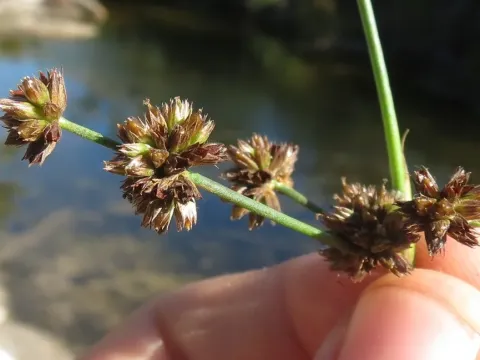
Juncus punctorius
Juncus punctorius
Juncus punctorius, a member of the Juncaceae family, is a perennial herbaceous plant widely recognized for its preference for wet, marshy habitats and riparian zones.
What the section contains
Juncus punctorius
The plant thrives in waterlogged conditions, requiring soil that remains constantly moist throughout the growing season, which makes it an ideal candidate for marshy or low-lying agricultural land.
Its climatic adaptability allows it to grow effectively in temperate and subtropical zones, where it demonstrates significant resilience to seasonal temperature fluctuations and water saturation.
Soil requirements for optimal growth focus on fertile, silty, or clay-heavy substrates that have high water-retention capacity, allowing the root system to extract necessary nutrients efficiently.
Light availability is a critical factor for Juncus punctorius; it is a heliophilous species that requires full sun exposure to achieve maximum photosynthetic activity and biomass production.
In terms of agricultural and environmental utility, Juncus punctorius is primarily utilized for phytoremediation, acting as an effective bio-filter for domestic and agricultural wastewater purification.
The biomass generated by this plant is valuable for sustainable manufacturing, specifically for producing traditional wicker-like materials, artisanal crafts, and biodegradable fiber products.
Farmers often use Juncus punctorius to reinforce embankment areas, as the dense, fibrous root systems are highly effective at preventing soil erosion in frequently flooded areas.
When managed properly in artificial wetland systems, the plant provides consistent annual yields of green material that can be recycled into compost or used for biogas energy production.
The productivity of the crop is directly correlated with the nutrient concentration in the water, making it a highly sustainable solution for integrated farm water management.
Juncus punctorius exhibits high natural resistance to many common agricultural fungal and bacterial diseases, largely due to its evolutionary adaptation to semi-aquatic environments.
Threats to the crop mainly include competition from invasive aquatic weeds such as cattails or common reeds, which can rapidly colonize space and reduce the density of the rush plantation.
Pest damage is generally low, although localized infestations of orthopteran insects or aphids can occur during hot, dry spells that compromise the plant's structural integrity.
Long-term environmental stress, such as extreme desiccation, can render the plants vulnerable to opportunistic pathogens that would otherwise be unable to infect healthy, water-saturated tissues.
Strategic management of site water quality is essential, as excessive heavy metal accumulation within the plant tissue can disqualify the biomass from being used in safe, eco-friendly consumer product applications.