
Juncus pelocarpus
Juncus pelocarpus
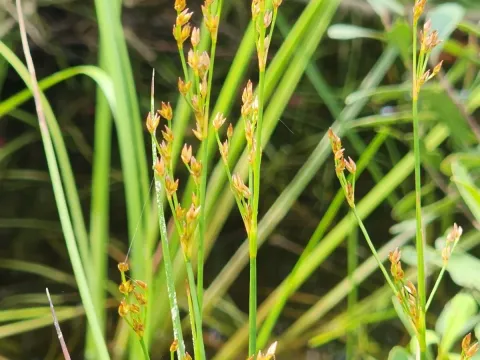
Juncus pelocarpus, commonly known as the dwarf rush or fruiting rush, is a perennial herbaceous plant belonging to the Juncaceae family. Naturally occurring primarily in North America, this species thrives in wet, sandy, or muddy habitats, including lake shores and marshy ditches.
What the section contains
Juncus pelocarpus
The plant exhibits remarkable botanical flexibility, capable of growing both as an emergent form on saturated soil and as a submerged aquatic form in shallow waters. It features slender stems and often produces small, reddish-brown flower clusters, which are characteristic of its unique reproductive strategy.
Climate and soil requirements focus on consistent moisture levels. The species prefers acidic to neutral soils and performs best in well-lit environments. It is highly resilient to variations in water depth, allowing it to adapt to fluctuating shorelines without compromising structural integrity.
Agrotechnical management involves maintaining appropriate water levels to encourage dense root mat development. Because the species is a natural wetland colonizer, it requires minimal intervention, provided that the substrate maintains sufficient levels of organic and inorganic nutrients for healthy expansion.
Commercial and environmental use of Juncus pelocarpus is primarily centered on landscaping and water treatment. It is increasingly utilized in bioretention systems and constructed wetlands for its capacity to remove excess nutrients from water, thereby improving the overall health of aquatic ecosystems.
Primary threats include root rot pathogens, which often arise in stagnant, oxygen-poor water conditions. These infections can lead to chlorosis and the wilting of the vegetative shoots, significantly reducing the biomass and aesthetic value of the planting.
Insect pests that target wetland vegetation represent a secondary threat, often feeding on the succulent stems. Proper site selection and avoiding overly dense plantings help to minimize the risk of pest outbreaks and disease spread throughout the colony.