
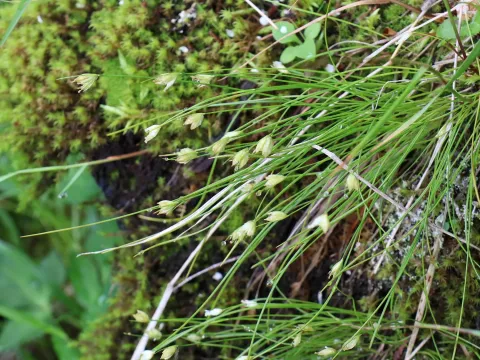
Juncus maximowiczii
Juncus maximowiczii
Juncus maximowiczii belongs to the Juncaceae family. It is a perennial herbaceous plant that naturally thrives in moist and marshy areas, commonly found across the Russian Far East, Japan, and Sakhalin regions.
What the section contains
Juncus maximowiczii
This crop exhibits significant ecological plasticity regarding moisture levels, making it a viable candidate for land reclamation and shoreline stabilization projects. The plant develops dense tufts of thin, rigid cylindrical stems, which provide structural resilience against periodic waterlogging.
Successful cultivation requires acidic to sub-acidic soils rich in organic matter. The optimal thermal regime aligns with temperate-cold climates, where the plant demonstrates high frost resistance and tolerates substantial seasonal temperature fluctuations.
In terms of agricultural management, light exposure is a critical factor for development. In low-light conditions, the stems become thin and lose their mechanical integrity, which reduces the overall quality of the biomass for potential industrial or landscaping uses.
The plant cannot withstand prolonged dehydration of the substrate. Under cultivation, it is essential to maintain a consistent water table or employ supplemental irrigation to ensure proper turgor pressure within the plant tissues.