
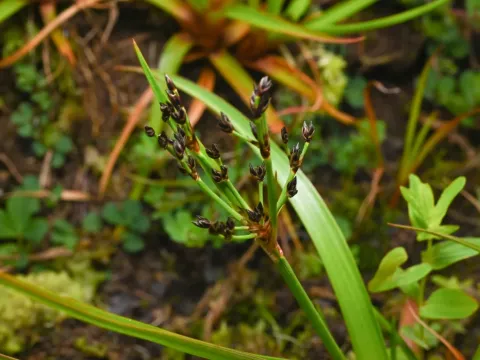
Broadleaf rush
Juncus planifolius
Broadleaf rush (Juncus planifolius) is a perennial herbaceous plant belonging to the Juncaceae family. Naturally occurring in South America, Australia, and New Zealand, it is highly adapted to wetland environments and boggy soil conditions.
What the section contains
Broadleaf rush
Botanically, the species is identified by its narrow, flat leaves that grow in dense basal clusters. The flowering stems typically reach heights between 15 and 40 centimeters. The plant produces distinctive globular inflorescences at the tips of the stems, which are characteristic of the genus.
For cultivation, the plant requires consistently moist or saturated soil conditions. It thrives in sunny locations but can also tolerate partial shade. Proper moisture management is the most important factor in the successful agronomy of this culture, as it does not tolerate drying out.
Regarding soil requirements, it prefers slightly acidic to neutral substrates rich in organic matter. In landscaping, it is often utilized to stabilize pond margins and wetlands, where its dense root system helps prevent soil erosion and contributes to water filtration.
The economic value of this plant is primarily linked to its ornamental use and environmental applications. It serves as an excellent candidate for ecological engineering projects aimed at bio-remediation and creating sustainable drainage landscapes.
The primary threats to Broadleaf rush are fungal pathogens, specifically root rot, which occurs if the soil becomes stagnant and waterlogged during cold periods. Ensuring proper soil aeration is vital for long-term survival.
While pests are generally uncommon, aphids or spider mites may occasionally affect plants grown in greenhouse or nursery environments. Monitoring these pests is recommended to maintain optimal plant quality.
Weed control is the most demanding aspect of the initial planting phase. Young rushes grow relatively slowly and are easily outcompeted by invasive weeds; therefore, mechanical weeding or mulching is often necessary until the stand is fully established.
Insufficient light intensity can cause the plants to lose their characteristic upright form, leading to etiolation. A weakened plant is significantly more susceptible to opportunistic infections and environmental stress.
Maintenance involves periodic grooming to remove old or damaged foliage. When provided with consistent moisture and appropriate light, Broadleaf rush is a hardy plant that requires minimal chemical intervention.