
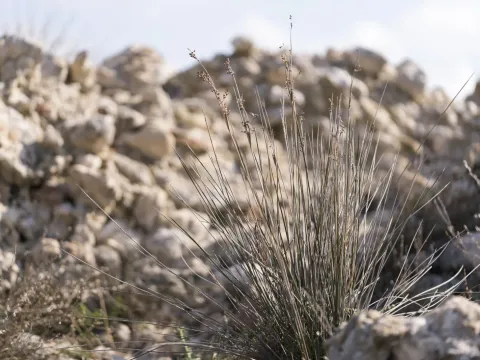
Juncus heldreichianus
Juncus heldreichianus
Juncus heldreichianus is a member of the Juncaceae family, known for its ability to thrive in challenging, saline environments. It is a perennial grass-like plant that exhibits high resilience to coastal conditions and periodic soil saturation.
What the section contains
Juncus heldreichianus
This species is classified as a halophyte, meaning it can successfully grow in salty soil where conventional crops would fail. Its physiological structure allows it to maintain osmotic balance, making it an excellent candidate for agricultural use in degraded, saline landscapes.
The plant requires full sun to partial shade and prefers moist, silty, or sandy substrates. It is particularly well-adapted to habitats where groundwater mineral content is relatively high, often serving as a pioneer species in wetland restoration projects.
Agronomic management focuses on monitoring soil moisture levels to ensure the plant remains productive. Since it is highly tolerant of flooding, it is suitable for marginal lands where drainage is difficult to maintain using conventional methods.
Regarding its utility, the plant is harvested for its fibrous stalks, which can be utilized for weaving, mulching, or as a source of biomass in specific ecological applications. Its root system is also highly effective at preventing soil erosion.
Fungal infections, particularly those triggered by excessive humidity and stagnant water, are the primary disease threat for Juncus heldreichianus. These pathogens can cause stem necrosis and overall loss of biomass vigor.
Insect pests include various stalk-borers and sap-sucking insects that can weaken the plant architecture. In dense stands, these pests can spread rapidly if the ecological balance is disturbed or if the plant is stressed.
Cultural control measures, such as thinning stands and managing irrigation, are essential to minimize disease outbreaks. Because the plant is often located in sensitive areas, integrated pest management (IPM) is strongly recommended over heavy pesticide use.
Monitoring for signs of pest infestation should begin early in the growing season. Physical removal of infected plant material can effectively prevent the spread of disease within a controlled environment.
In conclusion, the plant's robustness serves as its best defense, but consistent observation is necessary for maintaining healthy yields. Balancing the environmental conditions helps minimize the need for external chemical intervention.