
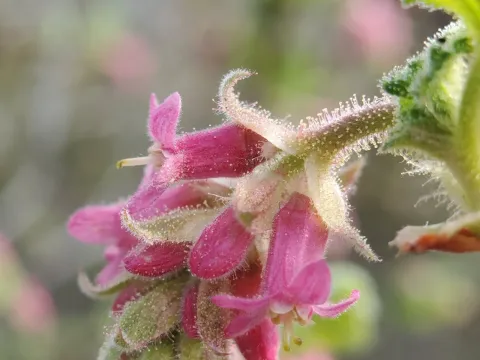
Purple currant
Ribes purpurascens
Purple currant (Ribes purpurascens) belongs to the Grossulariaceae family. It is a unique shrub species native to the high-altitude regions of Central Asia, specifically thriving in the harsh environments of the Tibetan Plateau.
What the section contains
Purple currant
The plant is highly adapted to temperate alpine climates. It requires significant thermal fluctuations to complete its developmental cycles and is typically found growing on rocky mountain slopes where soil drainage is naturally excellent.
Regarding soil requirements, this species favors well-drained, slightly acidic to neutral soils. It cannot tolerate heavy waterlogging, which is critical to consider for any attempt at artificial propagation or experimental cultivation in gardens.
Botanically, it is distinguished by its compact growth habit and, notably, the purple pigmentation of its flowers and developing fruits. The leaves are generally thick with pubescence, an evolutionary adaptation to preserve moisture in dry, high-altitude air.
From an agricultural standpoint, it serves primarily as a resource for plant breeding. Due to its resistance to extreme temperatures and specific pathogens, it is studied for its potential to improve commercial currant varieties through cross-breeding.
The primary diseases affecting this species are fungal infections, such as anthracnose and powdery mildew, which flourish in cool, humid conditions and can cause premature leaf drop.
Insect pests include aphids and various types of mites that target the soft tissues of the leaves. Infestations are generally managed by maintaining proper plant spacing and ensuring good airflow within the canopy.