
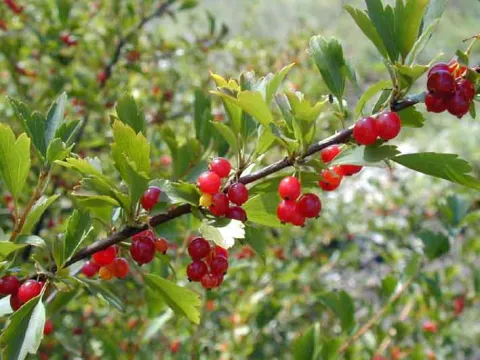
Ribes dicanthum
Ribes dicanthum
Ribes dicanthum, known as the two-spine currant, is a deciduous shrub belonging to the Grossulariaceae family. Native to Eastern Siberia, Mongolia, and Northern China, this species typically inhabits rocky slopes and river valleys.
What the section contains
Ribes dicanthum
This shrub is notable for its exceptional cold hardiness, allowing it to thrive in harsh, continental climates. It is highly resistant to extreme temperature fluctuations and can withstand prolonged periods of drought during the growing season.
The plant requires well-drained soil, as it does not tolerate waterlogging. It performs best in light sandy or loamy soils with good aeration. Amending the soil with organic matter significantly boosts plant vigor and overall development.
Botanically, the shrub remains compact, generally reaching a height of 1–1.5 meters. The name refers to the prominent thorns located at the nodes of its shoots, a characteristic that distinguishes it from most common currants and links it to gooseberries.
This species is photophilous and requires full sun for optimal health. Planting it in shaded areas leads to poor fruit bud initiation and a substantial decrease in berry yields, making site selection crucial for successful cultivation.
The primary agricultural use of Ribes dicanthum lies in plant breeding. It serves as a valuable genetic donor for cold hardiness and environmental resistance, helping researchers develop improved currant and gooseberry varieties.
The fruits are small, red berries with a characteristic tart flavor. While edible, commercial production for fruit harvest is limited by the presence of thorns, which makes manual picking difficult compared to thornless varieties.
While wild populations vary in yield, cultivated specimens benefit greatly from regular irrigation and supplemental feeding. These practices can significantly enhance berry size and the overall quantity of the harvest.
The berries are rich in vitamin C and organic acids, making them a nutritious raw material for home processing, such as syrups, jams, and refreshing drinks, especially in the regions where the plant is native.
Because of its resilience, the two-spine currant is often utilized in landscape gardening for slope stabilization and as a protective hedge. Its hardiness makes it an excellent choice for sites with challenging conditions where more delicate crops fail.
Ribes dicanthum possesses strong natural resistance to many common currant pests and diseases. However, it can still be susceptible to powdery mildew if grown in areas with poor air circulation or consistently high humidity.
Common pests, such as the currant bud mite, rarely cause significant damage due to the plant's structural toughness. During particularly hot and dry seasons, aphids may occasionally infest the foliage, requiring standard monitoring.
Pruning is an essential maintenance practice to ensure the longevity of the shrub. Thinning the crown improves airflow, which helps keep the foliage dry and drastically reduces the likelihood of fungal infections.
Regular sanitation—removing old, broken, or diseased wood—prevents the accumulation of pathogens. This simple practice maintains the overall health of the shrub and ensures that the plant remains vigorous year after year.
When pest intervention is necessary, the use of biological control agents is recommended to maintain the plant's ecological integrity. Avoiding heavy chemical use preserves the natural balance of the garden ecosystem.