
Ground cedar
Lycopodium complanatum
Description
Growing requirements
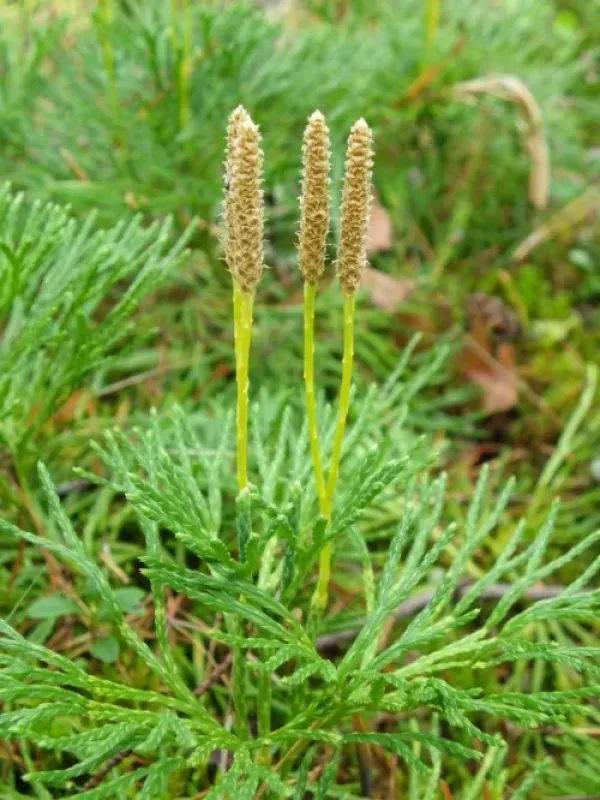
Ground cedar (Lycopodium complanatum) is a member of the Lycopodiaceae family. It is a perennial, evergreen, creeping plant that forms distinctive fan-shaped, flattened branches, from which it derives its name.
The native range of this species covers the boreal forests and temperate zones of the Northern Hemisphere. It typically thrives in coniferous or mixed woodlands where it grows along the forest floor, often among mosses and lichens.
The plant requires specific acidic soil conditions and consistent moisture levels to thrive. It is highly sensitive to soil disturbance and thrives best in shaded or semi-shaded environments where the canopy protects it from harsh, direct sunlight.
Biological propagation of ground cedar is notably slow, involving spores that must develop into gametophytes, which can take several years. The plant also spreads vegetatively by creeping stems that root at the nodes, allowing for slow horizontal expansion.
While historically used in traditional medicine and industrial processes due to the unique properties of its spores, the plant is now primarily valued for its ecological role. It is not widely cultivated as a commercial crop due to its complex growth requirements.
Main diseases and pests
The main threats to ground cedar populations include habitat destruction caused by forestry activities and urban development. Physical damage to the soil crust and the underlying mycelial network often leads to the death of the plant.
Pathogens affecting ground cedar are largely related to fungal infections that thrive in waterlogged or overly stagnant conditions. These infections can compromise the health of the rhizomes and reduce the plant's ability to produce spores.
Insect pests can damage the sporophylls, reducing the plant's reproductive success. However, these natural interactions rarely threaten the survival of a healthy, undisturbed population compared to environmental shifts.
Climate change, particularly shifts in precipitation patterns, poses a significant risk to the long-term survival of the species. Periods of prolonged drought are particularly damaging to the delicate, shallow root systems of these plants.
Conservation efforts for ground cedar focus on protecting intact forest environments. Sustainable forest management practices are essential to ensure the longevity of populations and prevent further loss of biodiversity.