
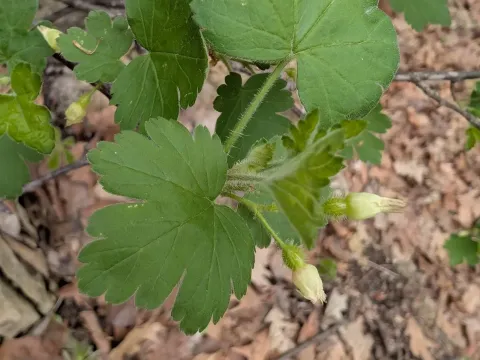
Prickly gooseberry
Ribes cynosbati
Prickly gooseberry (Ribes cynosbati) is a hardy shrub belonging to the Grossulariaceae family. Native to North America, it is often found in woodlands and rocky slopes, demonstrating high adaptability.
What the section contains
Prickly gooseberry
This species requires well-drained, nutrient-rich soils to thrive. While it can tolerate partial shade, it prefers cool, moist environments, making it suitable for regions with moderate temperatures.
Climate adaptation is a key feature of this plant, as it survives harsh winters well. However, during the spring growing season, it is sensitive to prolonged drought, which can lead to reduced fruit set.
Proper cultivation involves regular mulching to keep the roots cool and moist. Pruning is essential to encourage new growth and maintain an open canopy, which helps prevent various fungal infections.
Botanically, the plant is distinctive for its prickly stems and globular fruits. The berries are edible and have been historically used in traditional culinary applications, such as pies and preserves.
Powdery mildew represents the most significant fungal threat, especially in humid and stagnant air conditions. Improving airflow through regular thinning is the primary cultural control method.
Aphids can cause significant damage to succulent new foliage, leading to stunted growth. Monitoring the undersides of leaves is critical for early detection and mitigation of infestations.
Anthracnose can cause leaf spotting and premature drop, weakening the bush over several seasons. Fungicidal treatments should be applied during the early stages of the growing season if signs appear.
Currant borers are insects that tunnel into the stems, causing the branches to wilt and eventually die. The most effective control is to prune and destroy any infested branches immediately.
Sustainable pest management should prioritize the use of natural predators and avoid heavy chemical interventions. Keeping the garden area free of debris helps reduce the population of overwintering pests.