

Reference · Crops
Grossulariaceae
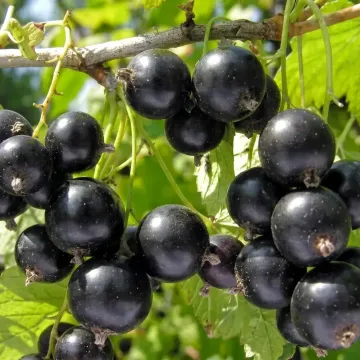
The Grossulariaceae family consists of perennial deciduous shrubs that hold significant economic importance in global berry production. This botanical family is primarily known for its two main genera, Ribes, which includes both currants and gooseberries, valued for their nutritional profiles and commercial versatility.
Main sections
100
sections
What the section contains
 Currant
Ribes L.
13 items
Currant
Ribes L.
13 items
 Alpine currant
Ribes alpestre
Alpine currant
Ribes alpestre
 Alpine currant
Ribes alpinum
Alpine currant
Ribes alpinum
 American black currant
Ribes americanum
Bethmont's currant
Ribes bethmontii
American black currant
Ribes americanum
Bethmont's currant
Ribes bethmontii
 Bieberstein currant
Ribes biebersteinii
Bieberstein currant
Ribes biebersteinii
 Bristly currant
Ribes setosum
Bristly currant
Ribes setosum
 Bristly currant
Ribes horridum
Bristly currant
Ribes horridum
 Broad-leaved currant
Ribes latifolium
Brown currant
Ribes fuscescens
Broad-leaved currant
Ribes latifolium
Brown currant
Ribes fuscescens
 Buffalo currant
Ribes odoratum
Buffalo currant
Ribes odoratum
 Bureya currant
Ribes burejense
Bureya currant
Ribes burejense
 California currant
Ribes californicum
California currant
Ribes californicum
 Carpathian currant
Ribes carpaticum
Carriere's Currant
Ribes carrierei
Carpathian currant
Ribes carpaticum
Carriere's Currant
Ribes carrierei
 Chaparral currant
Ribes malvaceum
Chaparral currant
Ribes malvaceum
 Cluster currant
Ribes fasciculatum
Cluster currant
Ribes fasciculatum
 Coast gooseberry
Ribes divaricatum
Coast gooseberry
Ribes divaricatum
 Colorado currant
Ribes coloradensis
Colorado currant
Ribes coloradensis
 Currant hybrids
Ribes hybrids
Currant hybrids
Ribes hybrids
 Darwin's currant
Ribes darwinii
Distant currant
Ribes distans
Darwin's currant
Ribes darwinii
Distant currant
Ribes distans
 Eastern currant
Ribes orientale
Emodi currant
Ribes emodense
Eastern currant
Ribes orientale
Emodi currant
Ribes emodense
 Evergreen currant
Ribes viburnifolium
Evergreen currant
Ribes viburnifolium
 Fontenay currant
Ribes fontenayense
Fontenay currant
Ribes fontenayense
 Fragrant currant
Ribes fragrans
Fragrant currant
Ribes fragrans
 Fuchsia-flowered gooseberry
Ribes speciosum
Girald's currant
Ribes giraldii
Fuchsia-flowered gooseberry
Ribes speciosum
Girald's currant
Ribes giraldii
 Glacial currant
Ribes glaciale
Gondouin currant
Ribes gonduinii
Glacial currant
Ribes glaciale
Gondouin currant
Ribes gonduinii
 Gordon currant
Ribes gordonianum
Griffith's currant
Ribes griffithii
Gordon currant
Ribes gordonianum
Griffith's currant
Ribes griffithii
 Hairy-stem gooseberry
Ribes hirtellum
Hairy-stem gooseberry
Ribes hirtellum
 Hawthorn-leaved currant
Ribes oxyacanthoides
Hawthorn-leaved currant
Ribes oxyacanthoides
 Henry's currant
Ribes henryi
Henry's currant
Ribes henryi
 Houghton currant
Ribes houghtonianum
Houghton currant
Ribes houghtonianum
 Hudson Bay currant
Ribes hudsonianum
Hudson Bay currant
Ribes hudsonianum
 Irrigated currant
Ribes irriguum
Irrigated currant
Ribes irriguum
 Japanese currant
Ribes japonicum
Koehne currant
Ribes koehneanum
Japanese currant
Ribes japonicum
Koehne currant
Ribes koehneanum
 Laurel-leaf currant
Ribes laurifolium
Lidia's currant
Ribes lydiae
Laurel-leaf currant
Ribes laurifolium
Lidia's currant
Ribes lydiae
 Lobb's currant
Ribes lobbii
Lobb's currant
Ribes lobbii
 Long-raceme currant
Ribes longeracemosum
Long-raceme currant
Ribes longeracemosum
 Magdalena Currant
Ribes magdalenae
Magdalena Currant
Ribes magdalenae
 Manchurian currant
Ribes mandshuricum
Manchurian currant
Ribes mandshuricum
 Many-flowered currant
Ribes multiflorum
Many-flowered currant
Ribes multiflorum
 Marshall's currant
Ribes marshallii
Maximowicz currant
Ribes maximowiczianum
Maximowicz's currant
Ribes maximowiczii
Marshall's currant
Ribes marshallii
Maximowicz currant
Ribes maximowiczianum
Maximowicz's currant
Ribes maximowiczii
 Menzies' currant
Ribes menziesii
Meyer's currant
Ribes meyeri
Menzies' currant
Ribes menziesii
Meyer's currant
Ribes meyeri
 Missouri currant
Ribes missouriense
Missouri currant
Ribes missouriense
 Mountain currant
Ribes montigenum
Mountain currant
Ribes montigenum
 Moupin currant
Ribes moupinense
Moupin currant
Ribes moupinense
 Nevada currant
Ribes nevadense
Nevada currant
Ribes nevadense
 Northern currant
Ribes spicatum
Northern currant
Ribes spicatum
 Oakleaf currant
Ribes quercetorum
Oakleaf currant
Ribes quercetorum
 Pine currant
Ribes pinetorum
Pine currant
Ribes pinetorum
Marketplace
Products in this section · 12

Биоорганическое нано удобрение "НАГРО" / "NAGRO"
LLC NPO "BIOPLAN"
Fertilizers
43
25
1 offer
37.63 €за л
Buy


Grossulariaceae
Originating in the temperate regions of the Northern Hemisphere, these plants have a wide natural range extending across Europe, Asia, and North America. They thrive in climates that provide sufficient moisture and a period of winter dormancy, which is essential for proper physiological development and consistent annual flowering.
Morphologically, these shrubs are characterized by simple, alternate, and often palmately lobed leaves. Depending on the species, the stems may be either smooth or armed with sharp spines. Their fruit is a distinct type of berry, typically globose in shape, containing numerous small seeds, and varying in color from translucent green to deep black or red.
Cultivation practices require careful site selection, prioritizing deep, loamy, and well-draining soils with a slightly acidic pH. Effective water management is crucial, as the root systems are relatively shallow and susceptible to moisture stress. Pruning is a fundamental part of the maintenance cycle, aimed at managing the bush architecture and removing wood older than three years to promote fruit production.
Agronomic challenges for Grossulariaceae species include susceptibility to pathogens such as powdery mildew, leaf spot, and rust. Furthermore, pests like the currant borer and various aphid species can cause significant damage if not managed correctly. Sustainable pest control strategies, including crop rotation and the use of resistant cultivars, remain the primary defense in modern commercial orchards.
- Nutritional richness, particularly in vitamin C and antioxidants.
- Widespread use in food processing (jams, jellies, and beverages).
- High adaptability to various temperate climate zones.