
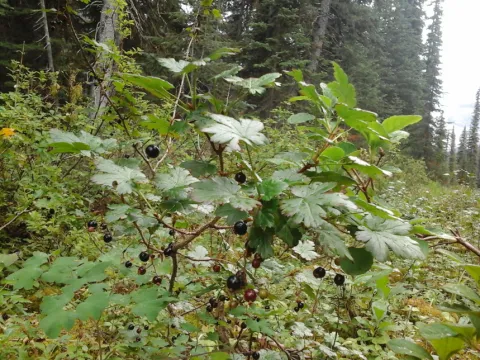
Prickly currant
Ribes lacustre
Prickly currant (Ribes lacustre) is a perennial shrub species belonging to the family Grossulariaceae. It is native to the temperate and boreal regions of North America, where it thrives in humid environments such as riparian corridors, moist forests, and shaded mountain slopes.
What the section contains
Prickly currant
This shrub is highly adapted to cold climates and exhibits significant frost tolerance. In terms of cultivation requirements, it prefers sites with consistent moisture levels and cool ambient temperatures, making it unsuitable for hot, arid environments that might cause heat stress to the foliage.
For optimal growth, the species requires well-drained, nutrient-rich soils with high organic matter content. While it appreciates constant soil moisture, it is sensitive to waterlogging; therefore, effective drainage systems are essential to maintain root health and prevent anaerobic conditions.
Botanically, Ribes lacustre is distinguished by its spiny stems, which are reminiscent of gooseberry bushes. The plant produces palmate leaves and delicate, drooping racemes of flowers, which contribute to its aesthetic value in addition to its biological utility.
The economic and agricultural utility of the prickly currant lies primarily in its genetic diversity. Because it is highly resistant to certain pathogens and environmental stresses, it is a valuable asset in breeding programs aimed at improving commercial cultivars of currants and gooseberries.
Like many species in the Ribes genus, the prickly currant is susceptible to powdery mildew. This fungal disease is particularly prevalent in areas with high humidity and poor air circulation, necessitating strategic spacing of bushes to ensure adequate drying of the leaves.
Pest management is another critical aspect of its cultivation. Aphids and currant borers can cause significant damage to the plant tissue if not addressed promptly. Integrated pest management strategies, including the use of beneficial insects, are recommended for long-term health.
Sanitary pruning is essential to eliminate any diseased wood or dead branches. By removing such material, growers can prevent the spread of fungal spores and ensure that the plant redirects its energy toward healthy, productive foliage and reproductive organs.
The prickly currant can sometimes act as an alternate host for blister rust, a disease that affects coniferous trees. It is essential to consider local landscape composition and maintain a safe distance between currant plantings and conifer stands to prevent cross-infection.
Maintenance of Ribes lacustre requires diligent monitoring and balanced soil fertility management. By providing the plant with the appropriate environmental conditions and proactive care, growers can maintain its health and ensure its continued role as a resilient berry-producing shrub.