
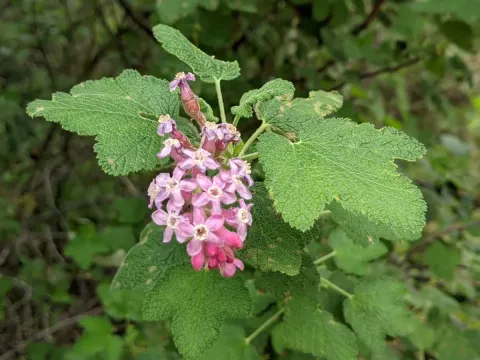
Chaparral currant
Ribes malvaceum
The chaparral currant (Ribes malvaceum) is a perennial shrub belonging to the Grossulariaceae family. Native to California, this plant is well-adapted to Mediterranean-type climates, characterized by dry summers and wet winters.
What the section contains
Chaparral currant
Botanically, it is distinguished by its lobed, textured leaves and clusters of tubular flowers that appear in late winter or early spring. This makes it a valuable ornamental species for gardens seeking to provide early resources for pollinators.
When choosing a planting location, prioritize sites with well-drained soil. The plant does not tolerate waterlogged conditions, which can lead to rapid root decay. Rocky or sandy loam soils provide the best substrate for its natural root development.
In terms of light, Ribes malvaceum thrives in full sun or light shade. In regions with extremely intense summer heat, some afternoon protection can prevent leaf scorch and preserve the aesthetic quality of the foliage.
Management involves minimal water once the plant is established. It is a drought-tolerant species, but supplemental irrigation during the first season is necessary to encourage deep root establishment and ensure long-term survival.
Rust fungi are the primary pathological threat, particularly in environments with poor air circulation. Pruning the center of the shrub to ensure good airflow can significantly mitigate the development of these fungal pathogens.
Aphids are common pests that colonize the tender tips of growing shoots. While they rarely kill the plant, heavy infestations can reduce vigor, so early detection and management are recommended.
Root rot is a critical concern, usually resulting from excessive moisture or heavy soil. Ensuring excellent drainage is the most effective preventative measure against this systemic health failure.
Spider mites may affect the plant during prolonged dry spells. Observing the foliage for signs of stippling or webbing is helpful for early intervention, usually achieved by washing foliage with a firm water spray.
Powdery mildew can occur if there are significant fluctuations in temperature. Avoiding overhead watering and keeping the foliage dry helps maintain the resilience of the plant against such infections throughout the season.