
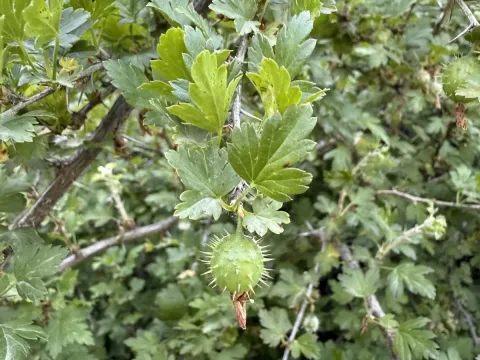
Bureya currant
Ribes burejense
Bureya currant (Ribes burejense) is a perennial deciduous shrub belonging to the Grossulariaceae family. This species is highly valued for its extreme winter hardiness, enabling it to thrive in the harsh climatic conditions of the Russian Far East and neighboring regions.
What the section contains
Bureya currant
Its natural habitat spans the Bureya River basin, parts of East Asia, and Northern Korea. The plant typically grows in mountain valleys, rocky slopes, and moist forest margins where the soil is rich in organic matter and well-aerated.
Botanically, this species is distinct due to the presence of sturdy thorns at the nodes of its stems, sharing a visual resemblance with gooseberries. The shrub grows up to 1.5 meters tall, forming a spreading canopy with dark green, pubescent leaves.
For successful cultivation, the plant requires well-drained loamy or sandy soils with consistent moisture levels. Although highly adapted to the wild, in a garden environment, it benefits from protection against strong, drying winds to maintain healthy foliage.
The economic value of Bureya currant lies primarily in its role as a genetic resource for plant breeding. Due to its robustness, it is frequently used to develop new, winter-hardy berry varieties that can withstand severe frost cycles.
Bureya currant possesses a high level of natural resistance to major fungal diseases common to commercial currants, such as powdery mildew and anthracnose. This natural immunity makes it an excellent candidate for low-input or organic gardening.
Potential threats include specific local insect pests; however, the plant’s thorny stems and leaf texture provide a degree of defense against many common leaf-eating insects. This significantly reduces the need for frequent pesticide applications.
Good agricultural practices, such as proper pruning and thinning of the shrub’s canopy, are essential to maintain airflow and minimize the risk of bacterial infections. Removing dead or damaged branches during the dormant season is highly recommended.
In humid areas, monitoring the root zone for rodent damage is advisable. Overall, compared to cultivated black currant varieties, this species demonstrates significantly greater resilience against environmental and pathological stressors.
Regular phytosanitary checks help to identify early signs of mite infestations. By addressing these issues early, growers can maintain the health of the plant without resorting to intensive chemical control measures.
The fruits of the Bureya currant are characterized by a unique, intense aroma and high levels of vitamin C and organic acids. Harvesting is typically done manually once the berries have reached full maturity, marked by their deep color.
The ripening period occurs in the second half of summer. The berries have a firm skin, which contributes to their decent shelf life and ease of transportation when handled carefully in shallow containers.
In culinary applications, these berries are highly prized for their pectin content, which makes them ideal for jams, preserves, and fruit jellies. They are also widely used in traditional beverages for their distinct tart flavor.
Following harvest, it is recommended to keep the berries in a cool, ventilated place to prevent moisture loss and maintain quality. Avoiding direct sunlight is crucial for preserving the nutritional integrity of the harvest.
Regular harvesting encourages the plant to focus energy on next year's fruit-bearing wood. Due to the thorns on the branches, harvesters should wear protective gloves to prevent injury during the collection process.