
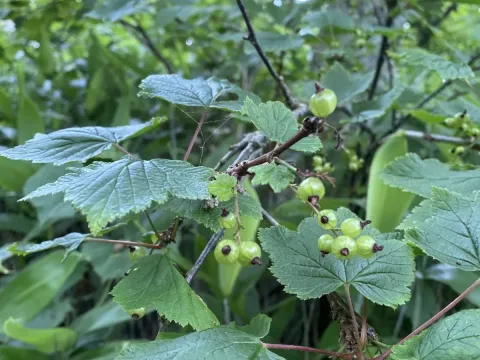
Broad-leaved currant
Ribes latifolium
Broad-leaved currant (Ribes latifolium) is a perennial shrub belonging to the Grossulariaceae family. Its natural habitat includes forested regions of East Asia and the Russian Far East, where it grows in cool, moist environments.
What the section contains
Broad-leaved currant
The plant thrives in well-drained, humus-rich soils with a neutral or slightly acidic pH. It prefers semi-shaded locations under the forest canopy but can adapt to full sun if moisture levels remain consistently high throughout the growing season.
Botanically, it is characterized by its broad, lobed leaves and sturdy, erect stems that are well-adapted to surviving harsh, freezing winters. The shrub typically grows to a moderate height and develops a dense root system.
In terms of agricultural techniques, this species requires regular mulching to keep the roots cool and moist. Due to its hardiness, it serves as an excellent resource for breeders developing new currant varieties for colder climates.
The culinary value of the berries is significant; they are rich in vitamins and antioxidants, making them a healthy addition to the diet. They are often harvested for local consumption or processed into jams and preserved fruits.
Powdery mildew is a primary concern for broad-leaved currants, especially in regions with high humidity and poor air circulation. Implementing proper spacing between bushes is essential to prevent fungal outbreaks.
Pests like aphids and currant borers can cause substantial damage to shoots and buds. Monitoring the plants during early spring allows for timely intervention before the infestation becomes severe.
Anthracnose can lead to premature leaf drop if not managed correctly. Removing debris and affected foliage from under the bushes during autumn is a crucial sanitation practice to minimize the pathogen population.
Root rot is typically associated with poorly drained soils or excessive irrigation. Ensuring that the soil structure is friable and that water drains efficiently is the best preventative measure against soil-borne pathogens.
General stress factors, including drought or extreme heat, can weaken the plant's immune system, making it more susceptible to opportunistic diseases. Maintaining vigorous growth through balanced fertilization helps the plant resist threats.