
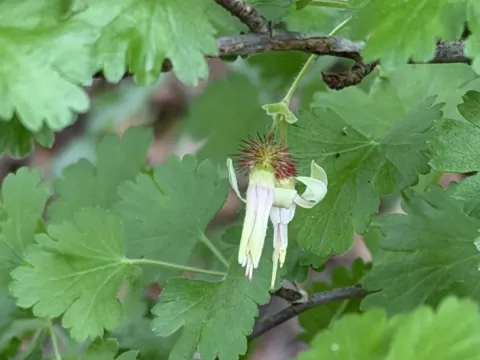
California currant
Ribes californicum
The California currant (Ribes californicum) is a deciduous shrub belonging to the Grossulariaceae family. Native to the coastal and mountain regions of California, this plant is well-adapted to the Mediterranean climate, often found growing in chaparral ecosystems and woodlands.
What the section contains
California currant
Botanically, the species is distinguished by its spiny stems and palmately lobed leaves. The shrub typically grows between one and three meters in height, exhibiting a spreading habit that makes it an interesting candidate for naturalistic landscape designs and wildlife gardens.
Regarding site requirements, Ribes californicum thrives in well-draining soils with a neutral to slightly acidic pH. It performs best in areas that offer protection from intense afternoon sun, particularly in inland regions where summer heat can be excessive for this coastal-adapted species.
While the plant shows significant drought tolerance once established, consistent moisture during the growing season is necessary to maintain optimal leaf turgor and aesthetic quality. Proper soil aeration is crucial, as the plant is susceptible to root stress in heavy, waterlogged clay soils.
The plant serves as an important ecological component, with its flowers attracting native pollinators and its fruit providing a food source for local bird species. In agricultural or horticultural settings, it is valued primarily as a hardy, low-maintenance ornamental shrub rather than for commercial berry production.
The most common disease affecting this species is powdery mildew, which can significantly damage foliage if airflow is insufficient. Proper pruning practices to thin out dense growth are highly recommended to promote air circulation and reduce the humidity levels that favor fungal spore germination.
Rust diseases can also present a challenge in regions with persistent spring rains. Management involves the removal and destruction of infected plant material and the application of appropriate systemic fungicides if the infection pressure is high enough to threaten the plant's structural integrity.
Pests such as aphids and spider mites are frequently observed on the young shoots and leaves. These pests are best managed through regular monitoring and, if necessary, the application of insecticidal soaps or horticultural oils to avoid harming beneficial pollinator populations in the garden.
Root pathogens associated with poor drainage are a primary cause of decline. Gardeners must ensure that the planting site remains free from standing water, particularly during the dormant season, to prevent the development of root rot and subsequent dieback of the woody frame.
Maintenance of plant health also requires careful consideration of the immediate environment. Avoiding high-nitrogen fertilizers that stimulate excessive, succulent growth can make the shrub less attractive to sap-sucking insects and less susceptible to the rapid spread of fungal infections.