
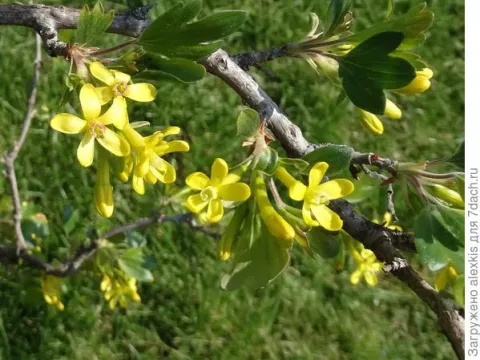
Buffalo currant
Ribes odoratum
The Buffalo currant (Ribes odoratum) is a deciduous shrub belonging to the Grossulariaceae family. Native to the central United States, this plant is valued both for its highly fragrant yellow flowers and its edible, dark-colored berries.
What the section contains
Buffalo currant
The species is exceptionally hardy, capable of surviving extreme temperature fluctuations. It is renowned for its drought tolerance and ability to thrive in poor soils, making it an excellent candidate for low-maintenance garden sites.
Unlike many other currants, Ribes odoratum is well-adapted to drier conditions. It thrives in full sun but can tolerate partial shade. While it prefers neutral soil, it is remarkably adaptable to various soil types, including heavy clays and rocky terrains.
Planting is best performed in early spring or autumn. Providing adequate spacing is crucial for airflow, as the shrubs can grow up to 2.5 meters in height and width, forming a dense and productive hedge.
Maintenance includes light pruning to remove dead or diseased wood and occasional rejuvenation pruning for older plants. The plant is resistant to many common diseases found in other members of the Ribes genus, adding to its ease of care.
The primary use of the Buffalo currant is for fruit production. The berries are sweet, rich in vitamins, and can be consumed raw or processed into jams, jellies, and desserts. They have a pleasant aroma that distinguishes them from blackcurrants.
Beyond food production, the plant is extensively used in landscaping. Its fragrant blooms in the spring make it a preferred choice for residential gardens, while its robust growth habit makes it suitable for ecological restoration and soil stabilization.
The main pests that may affect this plant include aphids and spider mites during hot, dry spells. Monitoring the undersides of the leaves and maintaining plant vigor usually keeps infestations at manageable levels without heavy chemical use.
While generally resistant, the plant can occasionally suffer from powdery mildew in high-humidity climates. Ensuring proper spacing and keeping the center of the bush open for air circulation is the most effective cultural control method.
Harvesting usually takes place in mid-summer once the berries reach full maturity and turn black. Since the berries do not ripen all at once, multiple pickings are recommended to ensure optimal quality and maximum flavor concentration.