
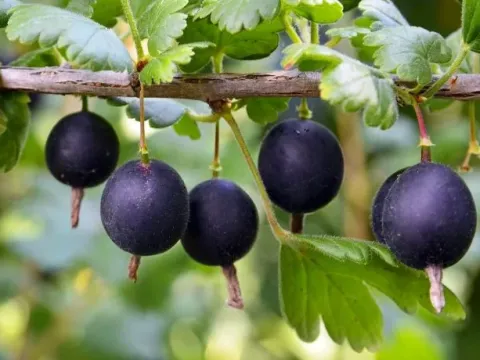
Currant hybrids
Ribes hybrids
Planting of currant hybrids is primarily carried out vegetatively using seedlings. The optimal time for planting is early spring before sap flow begins or in the autumn, 3-4 weeks before the soil freezes.
What the section contains
Currant hybrids
The choice of timing depends on the regional climate zone. In southern regions, autumn planting is preferred as it allows the plant to establish roots better and start vegetation early in spring.
In regions with harsh winters, it is recommended to plant seedlings in the spring to prevent the tender root system from freezing during the first year of growth.
For propagation, hardwood cuttings are used, prepared at the end of the dormancy period. They are planted in nurseries at an angle to encourage better formation of adventitious roots.
The planting site should be well-lit, as shading leads to reduced berry sweetness and leggy shoot growth.
Currant hybrids (family Grossulariaceae) are demanding regarding soil moisture but do not tolerate waterlogging. The crop prefers fertile loamy soils with a neutral pH level.
Plants require regular watering, especially during the formation of ovaries and berry filling. A lack of moisture leads to premature fruit drop.
Successful growth requires fertilization with organic and mineral fertilizers. Applying potassium and phosphorus in autumn increases the winter hardiness of the hybrids.
An important condition is regular pruning. Removing old branches stimulates the growth of new shoots, which produce the main yield.
Mulching the root zone helps conserve moisture and prevents weed growth, which is critical for young bushes in their first three years.
The yield of hybrid forms significantly exceeds that of wild species. With proper agronomic practices, one mature bush can produce up to 5-8 kilograms of berries.
The productive life of a plantation is 10-15 years. Over time, yield gradually decreases, necessitating rejuvenating pruning.
Berry weight in hybrids is usually larger than in traditional varieties. Some forms have increased resistance to shedding when fully ripe.
Yield levels depend directly on the cultivar's characteristics, such as early maturity and self-fertility.
The use of drip irrigation can increase average yields by 20-30% in dry years.
Among the most dangerous pests are the currant bud moth and spider mites. They can significantly reduce bush productivity in a single season.
Anthracnose and powdery mildew are the primary fungal diseases. To prevent them, modern fungicides are used, and planting schemes are followed to ensure proper air circulation.
The currant clearwing is a hidden pest that damages shoots from within. The main control method is timely sanitary pruning of affected branches.
Rust can affect leaves during high air humidity. An effective method is collecting and destroying fallen leaves in the autumn.
- Crop rotation
- Use of resistant hybrids
- Sanitary garden maintenance
- Copper-based sprays
Harvesting is performed as berries ripen. Hybrids often have a prolonged ripening period, so harvesting may take place in 2-3 stages.
For commercial use, it is important to consider the shelf life and transportability of the fruits. Berries with a dry abscission zone are valued higher for the fresh market.
Harvesting is recommended in the morning hours, after the dew has dried, to prevent berry spoilage during storage.
When using mechanized harvesting, special combines are employed, which requires bushes to be trained to a specific height and structure.
Harvested crops require immediate cooling to extend shelf life if the berries are not processed within a few hours.