

Reference · Crops
Currant
Ribes L.
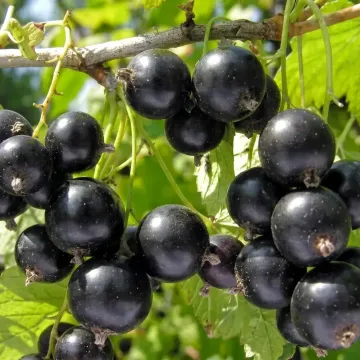
Currants, scientifically known as Ribes L. (family Grossulariaceae), are typically planted in the autumn, between late September and October, to allow roots to establish before winter.
13
items
What the section contains
 Gooseberry
Ribes uva-crispa L.
122 products
Gooseberry
Ribes uva-crispa L.
122 products
 Blackcurrant
Ribes nigrum L.
11 products
Blackcurrant
Ribes nigrum L.
11 products
 Buffalo currant
Ribes aureum Pursh
Buffalo currant
Ribes aureum Pursh
 Few-flowered currant
Ribes pauciflorum Turcz. ex Pojark.
Few-flowered currant
Ribes pauciflorum Turcz. ex Pojark.
 Flowering currant
Ribes sanguineum Pursh
Flowering currant
Ribes sanguineum Pursh
 Gooseberry
Ribes uva-crispa L. var. reclinatum (L.) Berl.
Gooseberry
Ribes uva-crispa L. var. reclinatum (L.) Berl.
 Gooseberry
Ribes uva-crispa L. var. sativum DC.
Gooseberry
Ribes uva-crispa L. var. sativum DC.
 Jostaberry
Ribes x culverwellii Macfarl.
Jostaberry
Ribes x nidigrolaria Rud. Bauer et A. Bauer
Jostaberry
Ribes x culverwellii Macfarl.
Jostaberry
Ribes x nidigrolaria Rud. Bauer et A. Bauer
 Redcurrant
Ribes rubrum L.
Redcurrant
Ribes rubrum var. domesticum Wallr.
Redcurrant
Ribes rubrum L.
Redcurrant
Ribes rubrum var. domesticum Wallr.
 Skunk currant
Ribes glandulosum Grauer
Skunk currant
Ribes glandulosum Grauer
 Snow gooseberry
Ribes niveum Lindl.
Snow gooseberry
Ribes niveum Lindl.
Marketplace
Products in this section · 12

Биоорганическое нано удобрение "НАГРО" / "NAGRO"
LLC NPO "BIOPLAN"
Fertilizers
43
25
1 offer
37.63 €за л
Buy


Currant
Spring planting is also an option, provided it occurs early, before the buds begin to swell. Delaying this process often results in poor establishment due to rising temperatures and moisture loss.
For planting, choose one- or two-year-old saplings with a healthy root system. Space the plants at least 1.5–2 meters apart to ensure proper airflow and light penetration across the entire bush.
Prepare the planting pits weeks in advance by incorporating compost or well-rotted manure alongside phosphorus and potassium fertilizers to ensure immediate access to nutrients.
Immediately after planting, cut back the stems to 15-20 cm above the soil surface, leaving 3-4 viable buds. This promotes bushy growth and a strong foundation for future yield.
Currants perform best in sunny, sheltered locations. While they tolerate partial shade, full sun is necessary for producing the largest, sweetest berries and ensuring consistent crop production.
The soil should be fertile, moisture-retentive, and well-drained. A slightly acidic to neutral loam provides the ideal environment for the shallow-rooted nature of these bushes.
Adequate hydration is vital throughout the growing season, especially during bloom and fruit set. Because root growth is concentrated near the surface, dry soil will quickly impact fruit development.
Mulching the root zone helps maintain stable soil moisture levels and prevents overheating. It also helps manage weed populations, reducing competition for essential nutrients.
Regular pruning is required to keep the bushes productive. Removing branches older than five years encourages new, vigorous growth and limits the habitat for diseases and pests.
The yield of a currant bush depends on the variety, age, and agricultural maintenance. A healthy, mature bush can produce between 3 and 6 kilograms of fruit per season.
Peak productivity is generally reached between 4 and 6 years after planting. Proper care can extend the useful life of a plant to over a decade, provided old wood is systematically replaced.
Currants are highly valued for both fresh consumption and commercial processing into juices, jams, and concentrates. They are recognized globally as a significant source of vitamin C.
Modern intensive farming methods, including drip irrigation and fertigation, significantly increase yield consistency, allowing producers to meet high market standards.
Utilizing varieties with different maturation dates allows for a prolonged harvest window, optimizing labor distribution and market availability for fresh produce.
Currant cultivation requires vigilance against various diseases such as powdery mildew, anthracnose, and leaf spot, all of which can severely debilitate the plants.
Pest management is a critical component of agricultural care, focusing on preventing the spread of common insects:
- Currant borers/moths
- Gall midges
- Sawflies
- Spider mites
- Mosquitoes
- Leaf miners
- Aphids
Integrated pest management strategies are highly recommended. This includes picking off infected leaves, destroying infested branches, and selecting resistant cultivars to reduce the need for chemicals.
Chemical applications should be strictly timed to avoid harming pollinators and to ensure that residues are below safety thresholds by the time of harvest.
Sanitation is key to prevention; clearing away fallen leaves and debris in the autumn removes the primary overwintering sites for both spores and insect larvae.
Harvesting should be timed based on the intended use. For immediate retail, berries are picked when fully ripe; for transport, they may be picked slightly earlier while still firm.
Berries should ideally be harvested during cool morning hours after any dew has evaporated. Harvesting while the fruit is wet significantly increases the risk of mold and post-harvest decay.
Commercial harvesting often utilizes mechanical harvesters. This requires specific planting layouts and the selection of varieties that demonstrate a clean, dry fruit detachment.
Once picked, it is essential to lower the field heat of the berries quickly to preserve their quality. Proper cold-chain management (0 to +2°C) is mandatory for long-term freshness.
Careful handling is required throughout the process, as the skin of the berry is thin and easily damaged. Bruised fruit loses quality rapidly and is unsuitable for extended storage.