
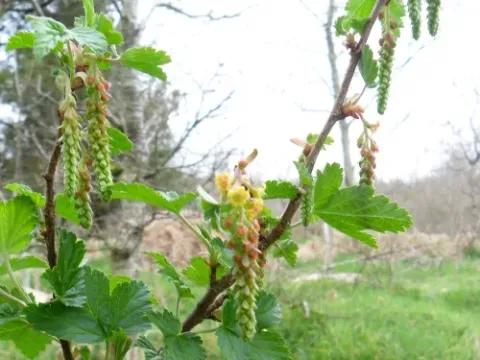
Darwin's currant
Ribes darwinii
Darwin's currant (Ribes darwinii) is an evergreen shrub belonging to the Grossulariaceae family. Native to the temperate forests of southern Chile and Argentina, this plant is known for its distinct botanical features and its status as a non-deciduous relative of common currants.
What the section contains
Darwin's currant
The cultivation of this plant requires well-drained, humus-rich soil. It thrives in locations that offer partial shade, avoiding the scorching heat of direct afternoon sun, and prefers protection from strong, desiccating winds.
Regarding moisture, this shrub demands a consistent supply of water but is highly susceptible to root rot if the soil becomes waterlogged. Proper drainage is essential to maintain a healthy root system throughout the growing season.
Agrotechnical practices involve pruning to maintain shape and density, typically performed after the flowering season. Fertilizing with balanced organic matter in early spring encourages vigorous growth and rich foliage production.
In landscaping, Darwin's currant is highly valued as an ornamental specimen. Its evergreen nature and attractive blossoms make it an excellent choice for cool-temperate gardens where it can serve as a structural element or a part of a dense hedge.
Common threats to Ribes darwinii include fungal pathogens such as powdery mildew, especially in environments with high humidity and stagnant air circulation. These conditions can compromise both the aesthetics and health of the shrub.
Pests such as aphids are frequent visitors, targeting the tender new growth during the spring months. These insects can cause curling leaves and stunted growth if left unmanaged by the gardener.
Preventive measures include maintaining appropriate plant spacing to ensure airflow, which is critical in preventing moisture-related diseases. Regular monitoring for early signs of infestation is highly recommended.
If chemical or organic control is required, selective use of insecticidal soaps or horticultural oils can be very effective against soft-bodied pests without causing significant damage to the plant's evergreen leaves.
Maintaining a clean garden bed around the base of the shrub prevents the accumulation of overwintering pathogens and pests, contributing to the long-term vitality of the Darwin's currant plant.