
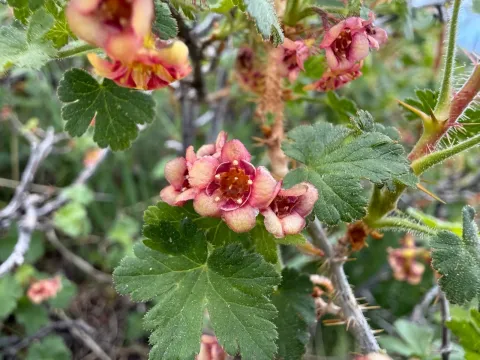
Mountain currant
Ribes montigenum
Mountain currant (Ribes montigenum) is a deciduous shrub belonging to the Grossulariaceae family. Native to the mountainous regions of Western North America, it is adapted to thrive in high-altitude environments, including alpine slopes and rocky ridges.
What the section contains
Mountain currant
The plant is highly resilient and prefers well-drained, rocky, or gravelly soils. It commonly occupies rocky outcrops, talus slopes, and open coniferous forests where soil nutrition is limited, demonstrating remarkable hardiness against environmental stressors.
Botanically, the mountain currant is characterized by its compact, thorny habit, rarely exceeding one meter in height. Its stems are heavily armed with sharp prickles, while its leaves are distinctively lobed and pubescent, an adaptation that reduces water loss in high-wind conditions.
The species requires significant sun exposure to reach its full potential. It is particularly sensitive to stagnant water and poor drainage, which can lead to root rot. Successful cultivation requires mimicking the natural, well-drained conditions of its mountain habitat.
Agronomically, this species is considered a niche plant with potential for landscaping or as a cold-hardy genetic source for breeding programs. Its ability to tolerate low nutrient availability makes it a candidate for restoration projects in high-elevation areas.
The mountain currant is not commercially grown as a large-scale agricultural crop. In the wild, its yield is generally low, as the plant focuses its energy on survival in harsh mountain climates rather than intensive fruit production.
The berries are small, dark, and often possess a tart, intense flavor that is appreciated by local foragers. Due to the thorny nature of the branches, harvesting is labor-intensive, making the plant unsuitable for mechanized agricultural operations.
Research on the yield of this species focuses on its berry chemistry and potential for specialized culinary use. Breeders are interested in its genetic traits, which could contribute to the development of currants that are more drought-tolerant and disease-resistant.
In a managed garden setting, pruning old or dead wood can stimulate new growth and potentially increase fruit sets. However, even under the best care, the mountain currant remains a low-productivity species compared to domesticated varieties.
Current хозяйственное использование primarily revolves around its ecological role in providing food for native wildlife. Its berries are a vital energy source for birds and small mammals living in high-elevation mountain ecosystems.
The mountain currant is susceptible to various fungal pathogens, most notably powdery mildew, which thrives in high humidity. Proper airflow and sunlight are essential to minimize the risk of infection in cultivated settings.
Pests such as currant aphids and various mites can cause significant damage to emerging buds and leaves. These pests are particularly problematic during the early growing season when the plant is most vulnerable to stunted growth.
Biological control methods are preferred, such as maintaining healthy soil and encouraging natural predators of mites and aphids. Harsh alpine conditions often limit the spread of pests, but in warmer, lower-altitude gardens, careful monitoring is necessary.
Preventative care is the most effective strategy for managing diseases. This includes avoiding overhead watering, which keeps foliage wet, and maintaining adequate spacing between shrubs to promote natural ventilation throughout the plant canopy.
Chemical intervention is generally discouraged, as it can disrupt the local ecosystem and potentially damage the sensitive plant tissue of this wild-origin species. Maintaining a balanced growing environment is key to keeping the mountain currant free from major threats.