
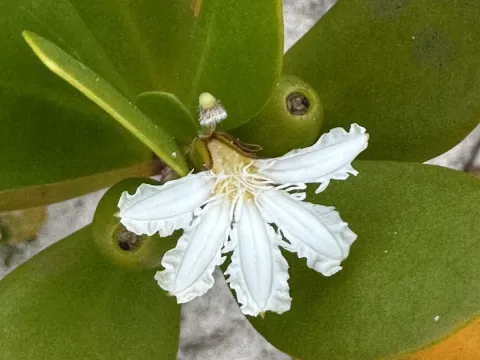
Scaevola plumieri
Scaevola plumieri
Scaevola plumieri is a notable plant species belonging to the Goodeniaceae family. Known for its resilience, it is widely recognized as a coastal halophyte, capable of thriving in saline environments and sandy coastal habitats.
What the section contains
Scaevola plumieri
Botanically, it presents as a low-growing, spreading shrub with succulent, glossy leaves that store water efficiently. This adaptation allows the plant to withstand intense solar radiation and high temperatures in its natural tropical range.
The plant requires full sun exposure and sandy, well-draining soil to thrive. It is highly intolerant of waterlogged conditions, which can lead to rapid deterioration of its specialized root structure.
In terms of climate, Scaevola plumieri demands tropical or subtropical warmth. It is highly frost-sensitive and should be kept in environments where temperatures do not drop below the freezing point.
Agricultural management for this species focuses on maintaining a natural balance of light and aeration. Supplemental fertilization should be sparse, as the plant is evolved to extract nutrients from poor, mineral-heavy coastal soils.
The primary threats to Scaevola plumieri include fungal pathogens such as root rot caused by poor soil drainage. Maintaining a dry, airy environment around the root zone is the best preventative measure.
Pest issues often involve sucking insects such as mealybugs and spider mites, which can infest the succulent foliage if the ambient humidity is kept too low in indoor or greenhouse settings.
Leaf-eating beetles may also cause damage to the foliage, requiring careful monitoring during the active growing season to prevent severe defoliation.
Environmental threats involve habitat destruction and competition from invasive species that can overrun the coastal ecosystems where this shrub provides essential stabilization.
Successful cultivation management relies on regular inspection of the plant's health, ensuring that no signs of wilting or discoloration are observed, which often serve as early indicators of pest or disease pressure.