
Scaevola montana
Scaevola montana
Description
Growing requirements
Scaevola montana is a distinct species within the Goodeniaceae family, native to the high-altitude volcanic regions of the Hawaiian Islands. Unlike its more common lowland relatives, this species has evolved to thrive in cool, moist, and often misty mountain conditions.
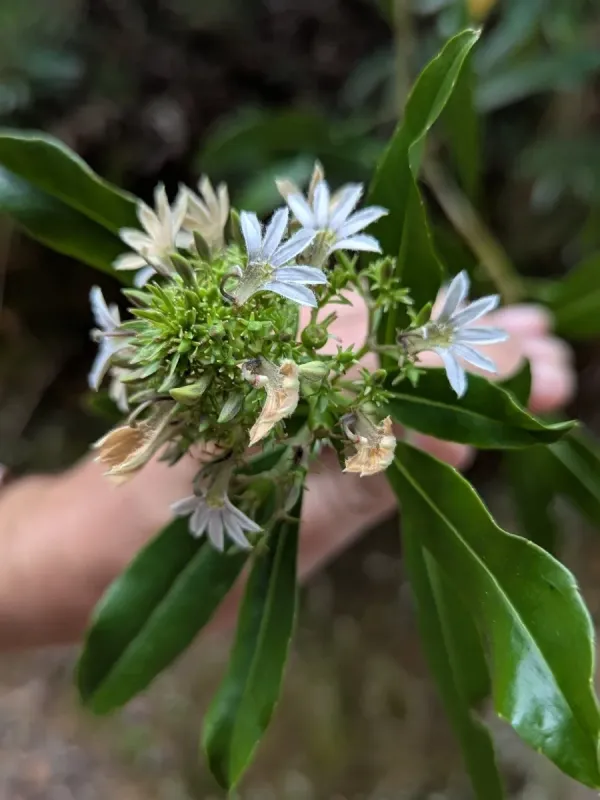
Botanically, the plant is characterized by its compact, shrubby habit and its iconic fan-shaped flowers. The blossoms exhibit a unique radial symmetry, appearing as if they were half of a flower, which is the hallmark of the Scaevola genus.
Climatic requirements for Scaevola montana are stringent; it prefers consistent, moderate temperatures and high humidity levels. Cultivation in standard lowland climates usually requires a controlled environment such as a greenhouse or a well-ventilated conservatory to mimic its native alpine niche.
The soil profile for this plant must be extremely well-draining, mimicking volcanic, rocky terrain. A mix of peat, perlite, and coarse sand provides the necessary aeration and moisture retention that prevents the roots from suffocation or rotting.
Economically, Scaevola montana is primarily utilized as a specialty ornamental plant. Its compact form and unique aesthetics make it a desirable choice for rock gardens, terrariums, and botanical collections that focus on rare or endemic species from tropical high-altitude ecosystems.
Main diseases and pests
Common fungal threats to Scaevola montana include powdery mildew and root rot, both of which are primarily linked to poor airflow and excessive moisture levels. Keeping the foliage dry during irrigation is a crucial preventive measure.
Pests that typically affect this species under greenhouse conditions include spider mites and whiteflies. These insects thrive in confined, warm environments and can quickly damage the plant's delicate foliage if left unmanaged.
Root rot is arguably the most lethal threat, often caused by heavy, compacted soil or frequent waterlogging. To mitigate this risk, one should use specialized substrates and ensure that pots have adequate drainage holes to allow excess water to escape immediately.
Biological pest control is recommended for this sensitive species to avoid chemical burns. Utilizing predatory mites or neem oil applications can help manage spider mite populations effectively without stressing the plant's physiological processes.
Maintaining a balanced nutritional regime is vital for plant health; excessive nitrogen may lead to succulent, weak growth that is more susceptible to both insect attacks and fungal outbreaks. A steady approach to fertilization promotes robust, resistant tissue development.