
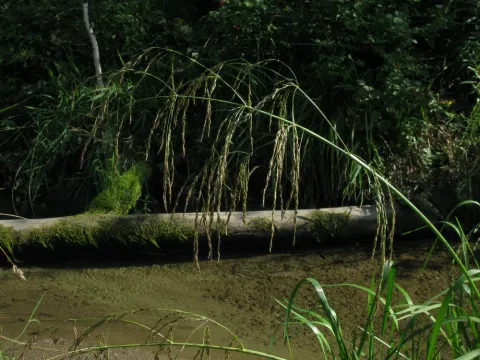
Glyceria triflora
Glyceria triflora
Glyceria triflora is a hydrophytic grass that requires high soil moisture content for successful establishment, making early spring the ideal period for sowing.
What the section contains
Glyceria triflora
The optimal planting window is usually in April, taking advantage of the post-winter soil moisture surplus to ensure rapid seed germination.
In regions with cooler climates, late autumn sowing can be a viable strategy, allowing seeds to naturally stratify over the winter months for vigorous spring growth.
The seeding rate should be adjusted based on seed size, typically ranging from 8 kg to 12 kg per hectare when utilizing standard drill-seeding methods.
Shallow depth placement of 1–2 cm is crucial for these small seeds to ensure they maintain contact with moist soil while receiving enough light for initial development.
As a member of the Poaceae family, this species is uniquely adapted to thrive in waterlogged environments, including marshes, floodplains, and near water bodies.
The plant demonstrates significant tolerance to prolonged submergence, an ecological trait that makes it superior to many traditional pasture grasses in wet meadows.
It prefers nutrient-rich organic soils, such as peat or heavy silts, but remains adaptable to various wetland substrates with neutral or slightly acidic pH levels.
Glyceria triflora exhibits remarkable winter hardiness, surviving harsh freezing conditions, which ensures its viability in temperate and cold climate zones.
Sunlight exposure is preferred for maximum biomass accumulation, though it can tolerate partial shade, reflecting its natural habitat in riparian ecosystems.
This grass is highly valued for forage production, providing a reliable source of green matter in territories where other crops would fail due to excess water.
The forage quality is excellent during the early vegetative stages, offering high protein content that is essential for cattle grazing and hay production.
Depending on soil fertility and moisture availability, the annual yield of dry biomass can range between 4 and 6 tonnes per hectare under managed conditions.
Glyceria triflora is characterized by rapid regrowth (regeneration) after mowing or grazing, which facilitates multiple harvests within a single growing season.
- Nutritional density in young stages.
- Excellent resistance to soil compaction in wet meadows.
- Ability to maintain yield in fluctuating water levels.
The most common issues for this crop involve fungal pathogens such as rust, which often propagate in areas with poor airflow and high humidity during the peak summer months.
Powdery mildew can also affect the productivity of the grass, particularly in sheltered areas where moisture tends to persist on the leaves for extended periods.
Stem-boring insects may pose a risk to the seed-bearing stems, potentially impacting the seed yield if the crop is intended for propagation or reseeding.
Preventative management, such as maintaining an appropriate density of the stand and timely harvesting, is more effective than chemical control in wetland environments.
As a sustainable agricultural practice, promoting natural ecosystem resilience is key to managing the health of Glyceria triflora stands in diverse landscapes.
The optimal harvest timing for hay is at the initiation of panicle emergence, as this ensures a balance between total biomass and nutritional quality.
For seed production, harvesting should be carefully monitored to capture the grains before natural shattering occurs, as the seeds have a tendency to drop when fully ripe.
Modern mechanization allows for efficient cutting and baling, which helps to preserve the structural integrity and nutrient density of the harvested forage.
After collection, proper drying techniques are necessary to reduce moisture levels, preventing spoilage and ensuring long-term shelf stability of the hay.
Consistent management of harvest cycles encourages the longevity of the stand, allowing the meadow to remain productive for many years of agricultural use.