
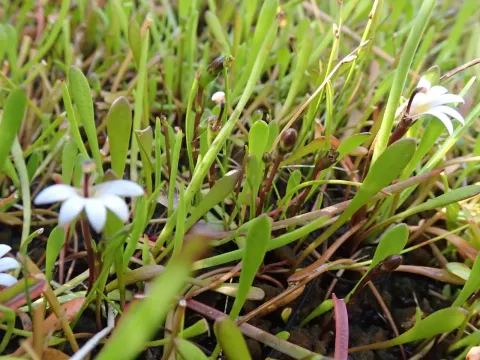
Calogyne
Calogyne
The genus Calogyne belongs to the Goodeniaceae family. These are herbaceous perennial plants that are primarily found in the natural landscapes of Australia. The culture is distinguished by a specific floral structure characteristic of the family, as well as glandular pubescence on its vegetative parts.
What the section contains

Calogyne
Under natural conditions, Calogyne thrives in regions with temperate and subtropical climates. They are typically found in sandy soils and well-drained areas where water stagnation is avoided. The plant exhibits high adaptability to periodic droughts, making it a resilient component of its local ecosystem.
For successful growth, Calogyne requires significant sunlight exposure, as insufficient light leads to stem elongation and reduced flowering intensity. From an agronomic perspective, it is critical to provide a light soil texture with a neutral or slightly acidic pH level.
The root system of the culture is compact, which allows the plant to be successfully grown in containers or as part of rock garden landscapes. The plant cannot tolerate waterlogging, so a reliable drainage layer is mandatory when cultivated in artificial environments.
The economic importance of Calogyne is currently limited to ornamental usage and research within botanical collections. It is not considered a mainstream agricultural crop, yet it remains a subject of interest for experts in the introduction and conservation of rare Australian flora.