
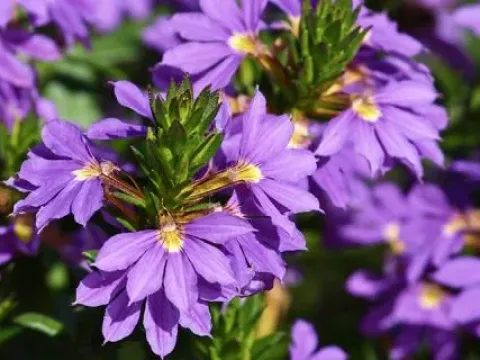
Scaevola hybrids
Scaevola hybrids
Scaevola hybrids are popular ornamental plants belonging to the Goodeniaceae family. Often referred to as fan flowers due to the unique shape of their blooms, these plants are widely utilized as trailing annuals in hanging baskets and mixed container displays.
What the section contains
Scaevola hybrids
Originating from Australia, these plants are well-adapted to warm, sunny environments. They thrive in locations that receive full sun for the majority of the day, which is essential for maintaining their vigorous growth habit and promoting continuous, prolific flowering throughout the season.
The optimal growing medium for Scaevola is a well-draining, nutrient-rich potting mix with a slightly acidic to neutral pH. Avoiding waterlogged soil is critical, as the roots are highly susceptible to rot, which can quickly compromise the plant's health and vigor.
Agronomic management requires consistent irrigation, ensuring the growing medium remains moist but not saturated. While the plant shows some tolerance to temporary drought, regular and even moisture levels are preferred to prevent flower abortion and keep the foliage lush.
In terms of usage, Scaevola hybrids are primarily grown for landscape aesthetics. Their trailing nature makes them excellent for ground cover in warm climates or as focal points in elevated containers, where their vibrant blue, purple, or white flowers can be showcased effectively.
The most common health issues affecting Scaevola hybrids are related to fungal pathogens, particularly root and stem rots. These diseases are typically triggered by poor drainage or excessive humidity, which creates an environment where pathogens can proliferate rapidly.
Pest pressure from aphids and whiteflies can be significant, especially in sheltered or warm environments. These pests feed on the nutrient-rich sap of the plant, potentially leading to stunted growth, leaf discoloration, and the accumulation of sticky honeydew.
Effective pest control involves a combination of mechanical removal for minor infestations and the application of horticultural soaps or systemic insecticides for severe outbreaks. Regular monitoring of the foliage, especially the undersides of the leaves, is highly recommended.
Prevention strategies should prioritize airflow and moisture management. Ensuring that containers have adequate drainage holes and avoiding overhead irrigation can significantly reduce the incidence of both fungal diseases and the susceptibility of the plant to infestation.
Proper sanitation is also vital; removing dead flowers and infected leaves helps maintain overall plant hygiene. Healthy, well-fertilized plants are inherently more resilient to stressors and exhibit faster recovery rates after minor pest or disease challenges.