
Brunonia
Brunonia
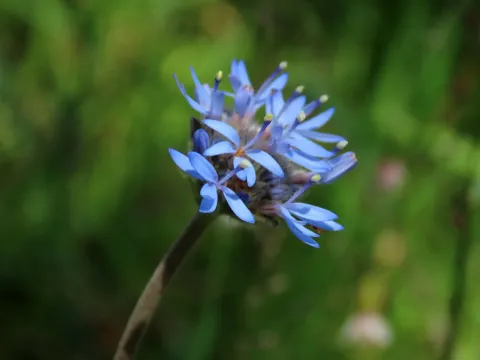
Brunonia (scientific name Brunonia) is a monotypic genus in the family Goodeniaceae. The only species, Brunonia australis, is widely known as the blue pincushion due to its striking floral heads.
What the section contains

Brunonia
Native to Australia, this plant is distributed across a wide range of habitats, from semi-arid regions to coastal areas. Its natural environment is characterized by nutrient-poor, rocky, or sandy substrates.
Successful cultivation requires very well-draining, gritty soil. The plant is highly sensitive to waterlogged conditions, which can lead to rapid root decay, making soil drainage the priority factor in its care.
Brunonia thrives in full sun exposure. It is well-adapted to high light intensity and performs best when temperatures are moderate to warm, reflecting its native climate in the southern hemisphere.
The plant grows as a perennial herb, forming a basal rosette of soft, hairy leaves. From the center of this rosette, one or more leafless stalks emerge, each bearing a dense, sky-blue flower head.
Root rot caused by Phytophthora or other soil-borne fungi is the most critical threat to Brunonia. It usually occurs when plants are overwatered or kept in heavy, non-porous potting media.
Powdery mildew can occasionally affect the foliage, particularly if the plant is kept in an environment with poor air circulation. Proper spacing between plants is essential to manage this risk.
Aphids are the most common insect pests that feed on the soft, developing flower stalks. While they rarely kill the plant, they can distort the shape of the inflorescences and reduce ornamental value.
Spider mites may become problematic during periods of extreme heat and drought. They extract sap from the leaves, causing stippling and yellowing, which weakens the plant's overall vigor.
To keep the plant healthy, avoid heavy fertilization. Brunonia is evolved to survive in low-nutrient soils, and excess fertilizer often makes the plant more susceptible to both pests and fungal diseases.