
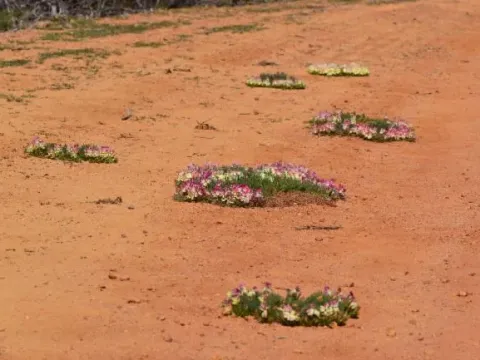
Wreath leschenaultia
Lechenaultia macrantha
Lechenaultia macrantha, commonly known as Wreath leschenaultia, belongs to the Goodeniaceae family and is native to the arid scrublands of Western Australia. This species is highly prized for its unique, wreath-like flowering habit, creating a dramatic circular display of red, pink, or yellow blooms.
What the section contains
Wreath leschenaultia
Cultivation requires conditions that strictly mimic its native sandy, well-draining soil profile. The plant is extremely drought-tolerant once established and thrives in Mediterranean-style climates where winter rains are followed by long, dry, and sunny summers without excessive humidity.
Adequate sunlight is the most critical environmental factor for this species. To achieve optimal flowering, the plant should be placed in a position receiving at least six to eight hours of direct sunlight daily. Lack of light results in poor foliage density and a complete failure to produce flowers.
Soil structure must be predominantly inorganic, featuring coarse sand or specialized grit to ensure rapid drainage. Fertilizer requirements are generally low; over-fertilization, especially with phosphorus, can be toxic to many Western Australian native plants, so slow-release low-P options are preferred.
Water management is the key to preventing plant mortality. During the growing season, only occasional, deep watering is necessary, allowing the soil to dry out completely between sessions. In winter, keeping the foliage and root zone as dry as possible is essential to prevent physiological distress.
The primary threat to Lechenaultia macrantha is root rot caused by Phytophthora species or other water-borne fungi. Once the root system is compromised by excessive dampness, the plant usually declines rapidly, showing yellowing of the foliage followed by sudden wilt.
Aphids are a frequent concern, particularly during the flowering season when they congregate on the tender flower buds. Their feeding can cause the buds to drop or fail to open properly, significantly impacting the decorative appeal of the plant during the spring flush.
Mealybugs represent another common challenge, hiding in the crevices of the branches and leaf axils. They are particularly difficult to eradicate due to their waxy protective coating, requiring systemic insecticides or frequent manual removal in small-scale garden settings.
Fungal leaf spot may occasionally occur if air circulation around the shrub is inadequate. This is often an issue in crowded garden beds where foliage stays wet for too long after dew or light rain, preventing it from drying out effectively during the morning hours.
Preventive care involves maintaining sufficient spacing between individual plants to ensure good airflow. Regular monitoring of the foliage and avoiding overhead irrigation methods are the most effective ways to mitigate the risk of pest outbreaks and disease development in this sensitive crop.