
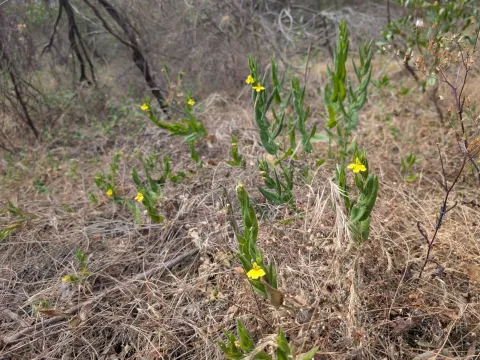
Goodenia
Goodenia Sm.
Sowing Goodenia seeds in temperate climates is typically done in late winter or early spring using a protected environment or greenhouse. The seeds often benefit from stratification to improve germination rates, so they are commonly sown in trays with light substrate while maintaining temperatures around 20 degrees Celsius.
What the section contains

Goodenia
In regions with mild winters, direct sowing into the garden is possible once the danger of late frost has passed. Seeds should be covered lightly with soil, as they require access to light to trigger the germination process successfully.
A critical factor during sowing is ensuring consistent moisture in the soil without creating waterlogged conditions, which can be lethal to young seedlings. Using peat pellets helps minimize root damage during the subsequent transplanting phase.
The optimal planting density depends on the specific Goodenia species, as some exhibit trailing habits while others form upright clumps. On average, a spacing of 20 to 30 centimeters between individual plants is recommended for proper air circulation.
Seedlings should be pricked out when the second pair of true leaves emerges. Before moving them to their final outdoor location, it is advisable to gradually harden off the plants to prevent transplant shock.
Goodenia thrives in well-drained, sandy or loamy soils with a neutral to slightly acidic pH. The plant is highly sensitive to water retention at the root zone, making adequate drainage essential when growing it in heavy or clay-rich soils.
This genus is light-demanding, and therefore, it should be placed in full sun to ensure prolific flowering. In partial shade, the stems tend to become leggy, and the overall flowering intensity decreases significantly.
Goodenia is well-adapted to arid periods and shows a good degree of tolerance to high heat. Nevertheless, to maintain peak decorative appearance during the height of the summer season, regular and moderate watering is necessary.
The temperature range for Goodenia should be moderate. Most species are not frost-hardy, so in cooler regions, they are often cultivated as annuals or kept as potted plants that can be moved indoors during the winter months.
During the active growth phase, Goodenia responds positively to the application of balanced mineral fertilizers with lower nitrogen content to promote bud formation rather than excessive vegetative growth.
The primary threat to Goodenia is fungal root disease caused by substrate waterlogging. Root rot can quickly destroy the plant, so it is vital to strictly control the irrigation regime and avoid overwatering.
In greenhouse conditions or areas with poor air ventilation, plants can become susceptible to powdery mildew, which appears as a white, dusty film on the leaves. Sulfur-based or systemic fungicides are effective for control.
Among pests, aphids cause the most damage by sucking sap from tender new shoots and flower stalks. It is recommended to use broad-spectrum insecticides or horticultural soaps to keep pest populations under control.
Spider mites may also infest the plant during hot and dry spells. Regular misting or increasing the ambient humidity around the plant can significantly reduce the risk of spider mite outbreaks.
Slugs and snails can pose a danger to young Goodenia seedlings, especially during wet weather. Using physical barriers or commercial slug baits is advisable to prevent extensive damage to the foliage.