
Fissidens
Fissidens
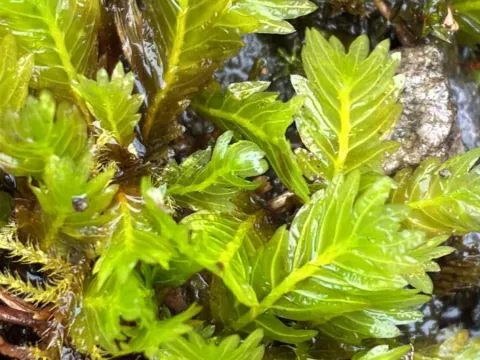
Fissidens is a diverse genus of acrocarpous mosses belonging to the Fissidentaceae family. These plants are scientifically recognized for their distinct leaf arrangement, where the leaves are distichous, meaning they are arranged in two rows, with the base of each leaf forming a sheathing structure known as the conduplicate blade.
What the section contains
 Fissidens adiantoides
Fissidens adiantoides
Fissidens adiantoides
 Fissidens bryoides
Fissidens bryoides
Fissidens bryoides
 Fissidens celticus
Fissidens celticus
Fissidens celticus
 Fissidens crassipes
Fissidens crassipes
Fissidens crassipes
 Fissidens curnovii
Fissidens curnovii
Fissidens curnovii
 Fissidens curvatus
Fissidens curvatus
Fissidens curvatus
 Fissidens dubius
Fissidens exiguus
Fissidens exiguus
Fissidens exilis
Fissidens exilis
Fissidens dubius
Fissidens dubius
Fissidens exiguus
Fissidens exiguus
Fissidens exilis
Fissidens exilis
 Fissidens gracilifolius
Fissidens gracilifolius
Fissidens gracilifolius
 Fissidens incurvus
Fissidens incurvus
Fissidens incurvus
 Fissidens limbatus
Fissidens limbatus
Fissidens limbatus
 Fissidens monguillonii
Fissidens monguillonii
Fissidens monguillonii
 Fissidens osmundoides
Fissidens osmundoides
Fissidens osmundoides
 Fissidens polyphyllus
Fissidens polyphyllus
Fissidens polyphyllus
 Fissidens pusillus
Fissidens pusillus
Fissidens pusillus
 Fissidens rivularis
Fissidens rivularis
Fissidens rivularis
 Fissidens rufulus
Fissidens rufulus
Fissidens rufulus
 Fissidens serrulatus
Fissidens serrulatus
Fissidens serrulatus
 Fissidens taxifolius
Fissidens taxifolius
Fissidens taxifolius
 Fissidens viridulus
Fissidens viridulus
Fissidens viridulus
Fissidens
The genus has a global distribution, found on almost every continent in habitats ranging from humid tropical forests to temperate zones. They are typically found in moist environments, including stream banks, damp soil, and shaded rocky cliffs. This ecological preference makes them highly specialized for niches with high humidity and stable moisture levels.
In a controlled agricultural or horticultural setting, such as an aquarium or a terrarium, Fissidens requires specific water parameters to thrive. An optimal temperature range is between 20°C and 26°C. Consistent water quality is essential, as the plant is sensitive to significant changes in water chemistry and excessive organic debris buildup.
The standard propagation technique involves dividing dense clusters into smaller segments. These pieces are then secured to inert substrates like volcanic rock, wood, or stainless steel mesh. Over time, the rhizoids anchor themselves to the surface, and the plant forms a lush, velvet-like carpet through steady vegetative growth.
The primary economic use of Fissidens is in the aquascaping industry and specialized botanical displays. It is a highly sought-after plant for hobbyists and professionals who design aquatic landscapes, as it provides a fine, detailed texture that creates a sense of scale and natural beauty in underwater layouts.
The most significant threats to Fissidens crops are the overgrowth of filamentous algae and cyanobacteria. Excessive light or imbalanced nutrient levels in the water column can trigger these pests, which quickly smother the moss. Furthermore, certain species of herbivorous invertebrates can damage the delicate fronds if left unmanaged.