
Fissidens curvatus
Fissidens curvatus
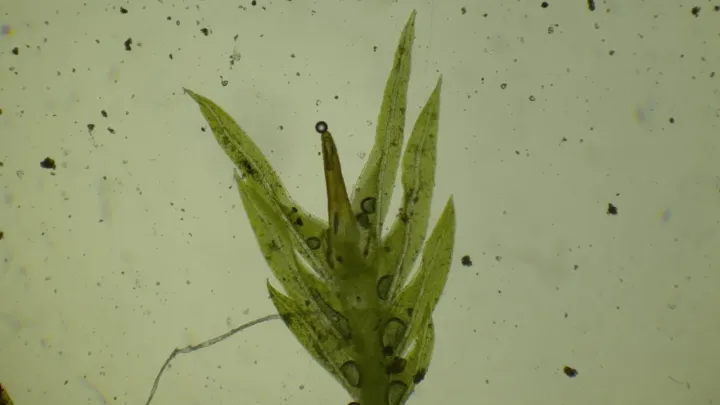
Description
Growing requirements
Fissidens curvatus is a distinctive moss species belonging to the Fissidentaceae family. Known for its elegant, feather-like appearance, it is commonly found in moist, shaded environments across subtropical and temperate zones, frequently colonizing rocks and wet substrates.
Botanically, this species is defined by its distichous leaves that feature a unique conduplicate structure. These leaves lack a complex internal vascular system, relying instead on high humidity or full immersion in water to facilitate the absorption of essential nutrients and moisture.
Environmental requirements for Fissidens curvatus include stable, moderate temperatures and a high degree of humidity if cultivated in an emersed form. In submerged conditions, it thrives best in cool to room temperature water with minimal fluctuations.
Soil or substrate requirements are minimal; as a bryophyte, it attaches to hard surfaces using rhizoids. For cultivation, placing the moss on porous substrates like driftwood or volcanic rock is ideal, as it allows for optimal attachment and root-like anchoring.
The cultural practice focuses on low-to-moderate lighting conditions. Excessive light exposure is detrimental, often leading to the bleaching of leaves or the rapid proliferation of competing algae, which can easily overwhelm the slow-growing moss colonies.
Main diseases and pests
The primary threat to the health of Fissidens curvatus is the encroachment of invasive algae species. Once algae begin to trap detritus within the moss structure, they create a suffocating layer that prevents gas exchange and leads to necrosis.
Invertebrate pests, particularly some species of snails, pose a localized threat. While usually not a primary food source, these mollusks can physically damage the delicate moss fronds during their grazing activities in an aquarium environment.
Physiological disorders often stem from improper water chemistry. High levels of nitrogenous waste or sudden shifts in pH can trigger structural breakdown, manifesting as wilting or the loss of the characteristic deep green coloration.
Insufficient water circulation is another significant risk factor. Without adequate flow, sediment settles deep within the moss mat, fostering an environment where anaerobic bacteria thrive and ultimately decay the base of the plant.
Maintenance to mitigate these threats includes regular gentle cleaning of the moss mats and balanced fertilization protocols. Ensuring the moss is not subjected to prolonged high-intensity light is essential for its long-term survival and vigor.