
Fissidens incurvus
Fissidens incurvus
Description
Growing requirements
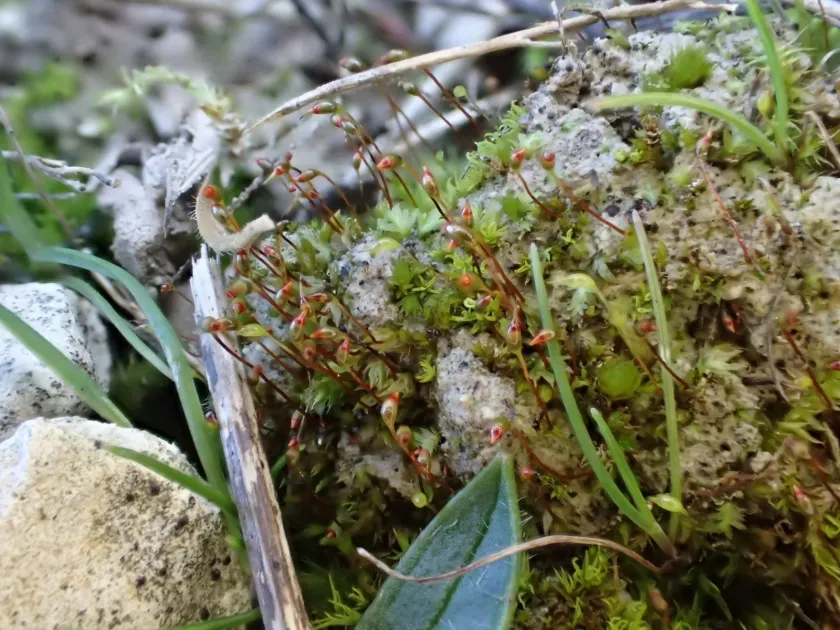
Fissidens incurvus is a species of acrocarpous moss belonging to the Fissidentaceae family. It is distinct due to its characteristic leaf arrangement, where leaves are attached to the stem in two opposing ranks, resembling a miniature comb.
The native habitat of this moss includes temperate regions across the Northern Hemisphere. It typically thrives in humid, shaded environments such as damp embankments, along stream banks, and on stable rocky substrates that maintain moisture throughout the growing season.
In cultivation, this plant requires high levels of atmospheric humidity. When grown in terrariums or aquaria, it demands a clean environment with stable water parameters, specifically preferring soft to moderately hard water conditions to prevent mineral crusting on the leaves.
Optimal growth is achieved in moderate, indirect lighting conditions. Excessive light intensity is often detrimental to Fissidens incurvus, leading to bleaching of the foliage and significant proliferation of nuisance algae that can outcompete the moss.
Economically and aesthetically, this species is highly regarded in the aquascaping community. It serves as an excellent 'carpeting' or accent plant for hardscape elements, providing a natural, aged appearance to stones and driftwood within underwater landscapes.
Main diseases and pests
The primary threat to Fissidens incurvus is the encroachment of fast-growing filamentous algae. If algae settle within the dense structure of the moss, they physically block the light and nutrient absorption, eventually killing the colony.
Bacterial decay is a frequent issue in environments with poor circulation. When organic detritus accumulates within the moss mat, it creates hypoxic zones that lead to the rapid deterioration and rotting of the base of the plant.
Fungal pathogens often target weakened moss tissues, especially if the plants have experienced prolonged drought or temperature stress. These infections manifest as fuzzy grey or white patches, requiring immediate mechanical removal of the affected area.
Temperature sensitivity is a critical factor for long-term survival. Exposure to heat spikes above 25°C generally causes metabolic stress, leading to tissue chlorosis and a total loss of the characteristic deep green pigment of the leaves.
Chemical imbalances, particularly an excess of nitrogenous compounds, can inadvertently promote rapid, leggy growth that lacks structural integrity. This makes the plant fragile and more prone to physical damage during routine maintenance tasks.