
Fissidens gracilifolius
Fissidens gracilifolius
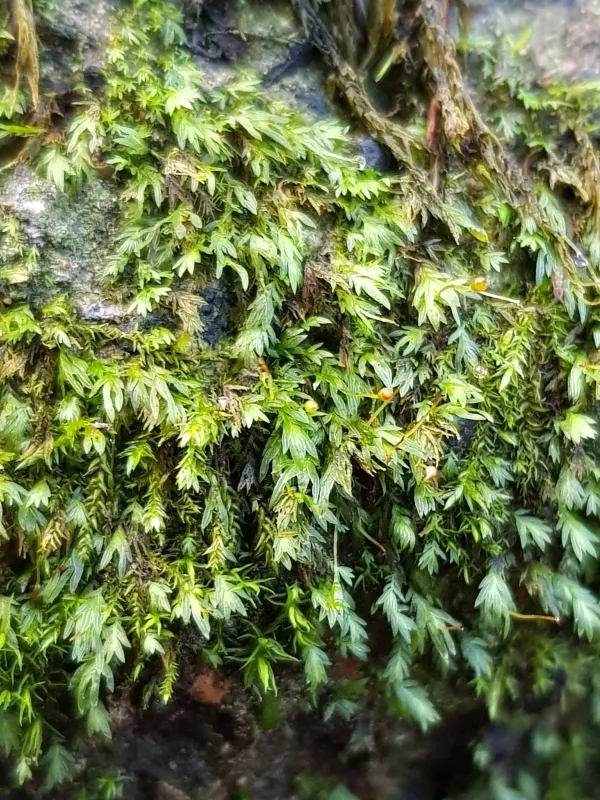
Description
Growing requirements
Fissidens gracilifolius is a distinguished member of the Fissidentaceae family, valued in the aquarium hobby for its delicate, fern-like appearance. Originating from tropical Asia, this bryophyte thrives in humid environments and shallow, slow-moving water bodies.
The culture requires a stable aquatic environment with water temperatures ranging from 20°C to 26°C. It is particularly sensitive to water quality, performing best in clean, nutrient-balanced systems where organic accumulation is kept to a minimum.
Optimal growth is achieved under moderate to high lighting conditions, which preserve the moss's characteristic compact, deep green structure. Insufficient light forces the plant to elongate, leading to a leggy growth pattern that significantly reduces its visual quality.
The plant should be attached to hardscape elements like driftwood or porous rocks using specialized glue or fishing line. Proper anchorage allows the rhizoids to establish a firm grip on the substrate, ensuring long-term stability and density of the colony.
Water chemistry stability is paramount for the health of Fissidens gracilifolius. While it can adapt to various water hardness levels, frequent or drastic shifts in pH can stress the plant, causing tip browning or stunted growth patterns over time.
Main diseases and pests
The most significant threat to this culture is the invasion of filamentous algae, which can easily overwhelm the delicate fronds. Preventing algal outbreaks through careful nutrient management and CO2 regulation is essential for maintaining a pristine carpet.
Fungal or bacterial decay may occur if water circulation is inadequate, leading to stagnant spots within the dense moss colony. Ensuring good water flow around the moss is critical to oxygenate the inner parts of the cluster and prevent necrosis.
Excessive organic waste settling on the moss acts as a precursor to disease, providing a substrate for harmful pathogens. Regular maintenance, including gentle cleaning or light currents, helps to clear debris and promotes active metabolic processes.
Herbivorous aquatic snails can cause significant damage to Fissidens gracilifolius by consuming young shoots. Maintaining a balanced ecosystem where the snail population does not become overwhelming is a key aspect of protecting the moss plantation.
Over-fertilization, particularly with heavy metals, can cause leaf tissue burn in this sensitive bryophyte. It is recommended to use specialized plant fertilizers with caution, ensuring doses are calibrated to the actual uptake rate of the aquatic system.