
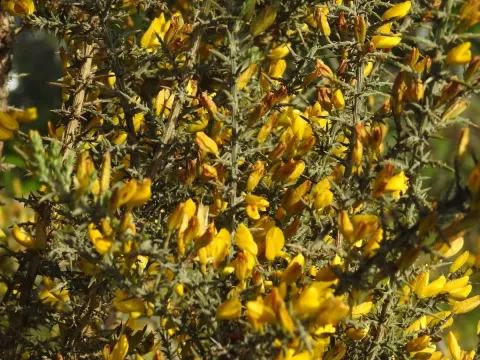
Woolly-branched gorse
Ulex eriocladus
Woolly-branched gorse (Ulex eriocladus) is a resilient evergreen shrub belonging to the Fabaceae family. Native to regions with mild climates, this plant is well-adapted to surviving on poor, acidic, and well-drained soils where other crops often struggle to establish.
What the section contains
Woolly-branched gorse
The plant thrives in full sun, which is critical for its dense, prickly branching habit. Its adaptation to harsh environmental conditions makes it a valuable species for ecological restoration and land reclamation projects in Mediterranean-type climates.
Soil structure is paramount for its survival. Ulex eriocladus prefers sandy or rocky substrates that provide excellent drainage, as the species is highly susceptible to root decay if subjected to waterlogging for extended periods during the rainy season.
Regarding agricultural practices, the species requires minimal intervention once established. Its ability to perform nitrogen fixation through root symbiosis allows it to improve soil quality, acting as a natural fertilizer for surrounding areas in managed systems.
Historically and agriculturally, this plant has been utilized for hedging, windbreaks, and erosion control. Its tough, spiny exterior acts as a natural deterrent to livestock, making it useful for marking boundaries or protecting more sensitive agricultural patches.
The primary threats to Ulex eriocladus plantations include fungal pathogens such as rusts and powdery mildew, which thrive in stagnant, humid environments where airflow is restricted around the shrub base.
Common insect pests include aphids and mites, which can cause significant damage to tender new growth during warm and dry spells. Regular monitoring and integrated pest management are necessary to maintain healthy growth cycles.
Root rot caused by Phytophthora species is a major risk in areas with high soil compaction or poor drainage. Selecting an appropriate site with adequate slopes is the best preventive strategy against such soil-borne threats.
Sanitary pruning of dead or diseased branches is essential to prevent the spread of infections. Proper spacing between individual plants ensures sufficient ventilation and reduces the likelihood of pest outbreaks.
During extreme seasonal changes, the plant may experience stress that requires careful management, such as applying protective mulch to regulate soil temperature, although it is generally a very robust and durable plant.