
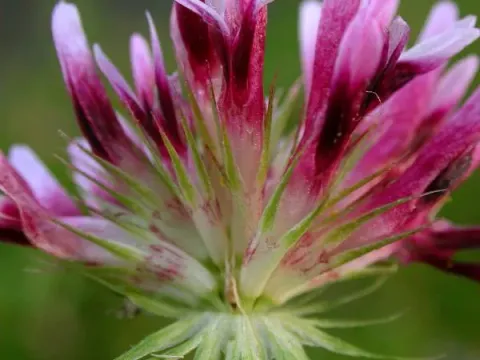
Wormskjold's clover
Trifolium wormskjoldii
Wormskjold's clover (Trifolium wormskjoldii) is a perennial legume native to the western coast of North America. It is widely recognized for its ability to thrive in coastal habitats and wetlands.
What the section contains
Wormskjold's clover
The plant exhibits remarkable tolerance to salinity and fluctuating water levels. Unlike many other clover species, it can survive in soils that are periodically waterlogged, making it an excellent candidate for specific ecological niches.
Regarding soil requirements, it prefers moist, well-drained locations but possesses the flexibility to handle salt-affected soils. Full sunlight is necessary for optimal bloom and nitrogen fixation efficiency.
Botanically, it features creeping stems and clover-typical trifoliate leaves with vibrant flower heads. These flowers are highly attractive to native bees and other essential insect pollinators throughout the growing season.
In agriculture, it is utilized primarily as a component of wet-meadow pastures. It improves soil structure and fertility through its nitrogen-fixing capabilities and maintains ecological stability in riparian areas.
The plant can be susceptible to typical legume pests, including aphids and clover weevils. These insects feed on leaves and stems, potentially reducing the overall quality of the forage.
Fungal diseases such as powdery mildew may develop during periods of high humidity and stagnant air. Management practices focus on ensuring adequate airflow through moderate plant density.
Root rot remains a concern if the soil drainage is compromised beyond the plant's natural tolerance. Proper water management is essential to keep the root systems healthy and vigorous.
Seed-feeding insects can reduce the generative potential of the crop. Monitoring during the flowering stage is recommended to assess the need for protective measures in seed-production fields.
Weed management is critical during the establishment phase. Once established, Wormskjold's clover is quite competitive, but young stands require protection from fast-growing weeds that compete for sunlight.