
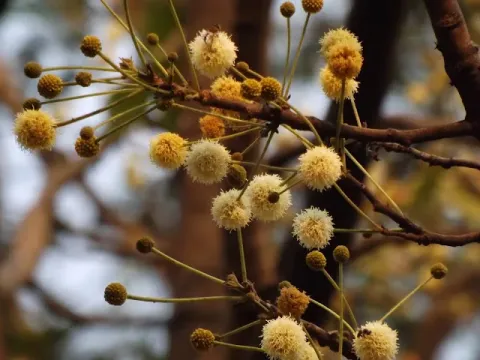
Xylia
Xylia
Xylia is a slow-growing tree species, so propagation in forestry projects usually begins with sowing seeds in nurseries during the onset of the rainy season.
What the section contains

Xylia
The seeds possess a hard seed coat, which requires mechanical scarification or soaking in warm water to ensure efficient and uniform germination rates.
Seedlings are best transplanted to their permanent outdoor locations during the early wet season to provide the necessary moisture for early root establishment.
Adhering to proper spacing is essential for Xylia, as the trees tend to develop broad crowns that require significant light exposure for optimal development.
Soil preparation involves deep plowing and the incorporation of organic matter to encourage strong root architecture during the initial stages of growth.
Xylia belongs to the Fabaceae family and thrives in tropical climates characterized by a distinct alternation between wet and dry seasons.
The tree is strictly heliophilous, requiring full sun exposure throughout its lifespan; therefore, it is poorly suited for shaded or dense canopy environments.
While the species is adaptable to various soil types, it prefers deep, well-drained loamy or sandy soils that prevent waterlogging and promote deep rooting.
It exhibits notable resilience to short-term drought, an adaptation that allows it to survive in regions with unpredictable rainfall patterns.
The ideal temperature range for growth is between 22 and 35 degrees Celsius, reflecting its native distribution in tropical and subtropical forest ecosystems.
The primary economic value of Xylia lies in its production of exceptionally dense and durable timber, commercially marketed as ironwood or irul.
Due to its slow growth rate, the crop is considered a long-term investment, requiring several decades to reach technical and commercial maturity.
Yield is measured by the volume of usable high-density timber per hectare, which increases significantly as the trees reach the age of 30 to 50 years.
Beyond timber, various extracts from the plant have potential applications in traditional medicine and industrial chemical processes.
Active management, including thinning and pruning, is crucial for maximizing the amount of high-quality trunk wood harvested from the plantation.
Young Xylia saplings are highly vulnerable to browsing by wild animals and rodents, which can damage the tender bark and stunted growth of the main stem.
Pests such as defoliating caterpillars and various wood-boring insects pose a significant risk, particularly during periods of environmental stress.
Fungal diseases, specifically root rot, can develop if drainage is inadequate, leading to the rapid decline of individual trees in a plantation setting.
Wood-boring beetles are a persistent threat to the timber quality, as they create internal galleries that compromise the structural integrity of the wood.
- Implement rodent-proof physical barriers around saplings.
- Monitor for signs of wood-boring beetle infestations.
- Ensure excellent field drainage to prevent fungal pathogens.
The harvest of Xylia timber is strictly conducted when trees reach the target diameter that guarantees the highest density and market value.
Felling is executed using professional tools, as the wood's extreme hardness requires specific equipment and techniques to ensure clean cuts.
Operations are scheduled during the dry season to ensure lower moisture content in the timber, facilitating better drying and preservation.
Initial processing involves delimbing and debarking on-site, which significantly reduces transport costs and prepares the logs for sawmill processing.
Proper seasoning and kiln drying are essential to prevent the dense timber from checking or cracking during the manufacturing process.