
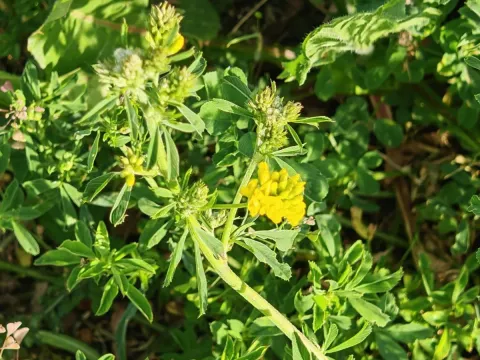
Yellow alfalfa
Medicago falcata
Yellow alfalfa, scientifically known as Medicago falcata, is typically sown in early spring when soil temperatures reach 5 to 8 degrees Celsius. This timing is crucial to take advantage of residual winter moisture, which is essential for the germination of its small seeds.
What the section contains
Yellow alfalfa
In regions with higher precipitation, late summer or early autumn sowing is also a viable option. Proper seedbed preparation, ensuring a firm and level surface, significantly improves the success rate of establishing a long-term stand of this hardy legume.
Seed depth should be kept shallow, between 1 and 2 centimeters, to prevent the tiny embryos from exhausting their energy before breaking through the soil surface. Utilizing a drill with depth bands is the most reliable method to ensure consistent seed placement.
Inoculation with specific nitrogen-fixing bacteria is recommended, especially in fields where alfalfa has not been grown recently. This step ensures that the plants can efficiently produce their own nitrogen, reducing the need for chemical fertilizers.
After seeding, rolling the field is a standard practice to improve soil-to-seed contact. This practice enhances capillary action, helping the seeds remain moist during the delicate germination phase even if dry weather follows shortly after planting.
Yellow alfalfa is widely recognized for its superior cold hardiness and drought tolerance, making it an excellent choice for challenging climates. It thrives in regions with severe winters that would typically kill off less hardy varieties of alfalfa.
The plant prefers well-drained, fertile soils with a neutral or slightly alkaline pH. While it is highly adaptable, it struggles in waterlogged conditions, which can quickly lead to root rot and severe stand depletion during the growing season.
Full sun is a strict requirement for this species. Yellow alfalfa performs poorly in shaded areas, where plant competition or tree cover can lead to spindly growth and reduced overall productivity in both biomass and seed yield.
It displays remarkable resilience on hilly terrain and slopes where it helps control erosion. Its deep taproot system acts as an anchor and allows the plant to access moisture from subsoil layers that other grasses cannot reach.
Adequate phosphorus and potassium levels in the soil are essential for long-term health. These minerals support the complex root structures and ensure that the symbiotic relationship with nitrogen-fixing bacteria remains active throughout the plant's life cycle.
The yield of yellow alfalfa is generally lower than that of commercial hybrids but is prized for its longevity. A stable stand can remain productive for over a decade, providing consistent grazing or hay harvests with minimal management inputs.
When used in pasture systems, it demonstrates excellent regrowth capability after grazing. Its ability to spread naturally through seed dispersal and rhizomatous growth helps maintain a dense canopy, which discourages the encroachment of invasive weed species.
In typical rain-fed conditions, farmers can expect one to two harvests per season. While this is less frequent than irrigated options, the feed quality remains high, particularly in terms of protein content and fiber digestibility.
Productivity increases significantly in irrigation-supplied environments. Under these conditions, the crop can be harvested more frequently, helping to maintain high levels of green matter production throughout the entire growing season.
Because it is a perennial with high drought resilience, it serves as an excellent "insurance" crop. Even in years with very low rainfall, yellow alfalfa continues to produce a reliable supply of forage when other grasses and crops fail.
Fungal diseases such as leaf spot and Fusarium wilt pose the greatest threat to stand health, especially in seasons with high humidity or poor field drainage. These pathogens can weaken the plants and reduce the overall biomass quality.
Insect pests, including aphids and alfalfa weevils, can significantly damage the plants. Aphids suck nutrients from the leaves, while weevil larvae feed on buds, directly reducing the plant's potential for both forage mass and seed production.
Lygus bugs are another concern, as they target the flowering parts of the plant, often leading to flower drop and reduced seed setting. Integrated Pest Management (IPM) strategies are vital to keep these populations below damaging thresholds.
To mitigate disease risks, avoid continuous cropping of legumes in the same field. Rotational grazing or harvesting practices can help break the lifecycle of many common pests and diseases, keeping the field cleaner and healthier.
Keeping the fields clean of excessive plant debris reduces the overwintering sites for many pests. Early monitoring in the spring, especially focusing on the early growth stages, is essential for implementing timely interventions if needed.
Timing the harvest is critical to maintaining the quality and longevity of the stand. The best time to harvest yellow alfalfa is during the early flowering stage when the nutritional value, specifically crude protein, is at its peak.
Harvesting too early can reduce total yield and potentially exhaust the plant's root reserves, while waiting too long causes the stems to lignify, resulting in lower digestibility and poor acceptance by livestock.
Proper cutting height, typically around 5 to 7 centimeters, is essential to protect the crown of the plant. Cutting too low can cause irreparable damage to the dormant buds, which are vital for the plant's regrowth in the following cycle.
After cutting, the windrows should be managed to ensure uniform drying. Minimizing the time the cut forage spends in the field reduces the risk of spoilage from unexpected rain and helps retain the essential leaves, which are the most nutritious part.
The final harvest should be completed several weeks before the first hard frost. This allows the plants to allocate sufficient energy back into their root systems, ensuring they have the reserves needed to survive the winter and break dormancy in the spring.