
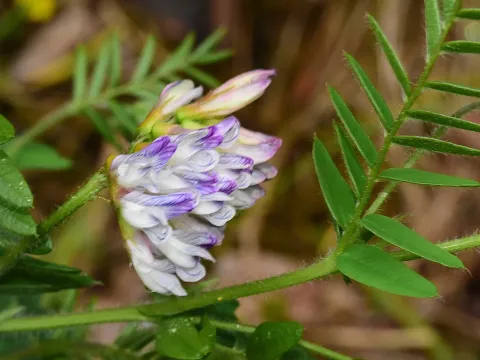
Wood vetch
Vicia orobus
Wood vetch is a perennial legume that requires careful planning during the sowing phase. The optimal time for planting is early spring, once the soil has warmed sufficiently to ensure rapid germination of the seeds.
What the section contains
Wood vetch
Proper seed preparation, including cleaning and testing for vigor, is essential for a successful crop. Seeds should be sown at a depth of 3 to 5 centimeters, depending on the texture and moisture content of the soil.
As a legume that develops slowly during its first season, early weed control is vital. Ensuring the field is free from competition in the initial weeks allows the plant to establish its root system effectively.
A standard drilling method with row spacing of 15 to 20 centimeters is recommended. This density supports a balanced growth habit and provides enough space for the plants to mature into a productive stand.
Rolling the soil after sowing is a highly recommended practice to improve seed-to-soil contact. This step is particularly important in drier springs to prevent the soil from drying out before the seeds sprout.
Wood vetch thrives in well-drained, fertile soils with a neutral pH level. It does not perform well in waterlogged conditions, so choosing a site with good natural drainage is a priority for agricultural success.
The plant is highly winter-hardy and capable of enduring significant cold spells during the dormant season. This makes it a reliable perennial option for regions with harsh winter climates.
Phosphorus and potassium availability are critical for the longevity of this forage crop. Soil testing prior to sowing is advised to ensure that nutrients are applied at the correct rates to sustain multi-year yields.
While wood vetch is resilient, it requires adequate light to reach its full productive potential. Shaded environments can limit its growth rate and reduce the density of the green matter per hectare.
Managing soil moisture during the growing season is important, especially during prolonged dry periods. Though the plant has moderate drought tolerance, sustained periods of moisture stress can affect total dry matter accumulation.
As a perennial crop, wood vetch can provide stable yields for several years. It is primarily used for hay production or as part of a high-quality grazing system for livestock.
The nutritional profile of wood vetch is high in protein, making it an excellent component for forage mixtures. It improves the overall feed value when harvested at the peak of its vegetative growth.
The crop is palatable to cattle and sheep, providing a consistent source of nutrients throughout the summer months. Grazing intensity should be monitored to ensure the plants recover sufficiently between cycles.
Seed production is possible but can be erratic due to the nature of the crop's flowering cycle. Growers interested in seed harvesting should focus on minimizing shattering by timing the harvest carefully.
Overall, wood vetch is valued for its persistence and ability to contribute to soil fertility through nitrogen fixation. This makes it a sustainable choice for rotational pasture systems.
Like many legumes, wood vetch can be susceptible to fungal diseases such as rust and leaf spots, especially in regions with high humidity. Maintaining proper field hygiene is essential to manage these risks.
Insects like the clover weevil can impact the development of the plants by feeding on leaves and roots. Monitoring for early signs of damage is necessary to decide if intervention is required.
Aphids can occasionally cluster on the stems, draining plant resources and slowing growth. Integrated pest management strategies, focusing on beneficial insects, are preferred over broad-spectrum pesticide use.
Crop rotation is the most effective prevention strategy for soil-borne diseases. Avoiding repeated planting of wood vetch on the same plot for many years helps prevent the buildup of specific pathogens.
Healthy, well-nourished plants are generally more resistant to environmental and biological stressors. Proper fertilization and timely weed control are the foundations of effective crop protection.