
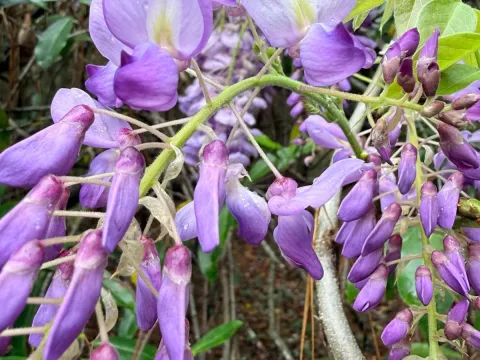
Wisteria
Wisteria Nutt.
Wisteria is a genus of woody twining vines belonging to the Fabaceae family. Native to East Asia and North America, these plants are highly valued in horticulture for their dramatic pendulous racemes of fragrant flowers.
What the section contains
 American wisteria
Wisteria frutescens (L.) Poir.
American wisteria
Wisteria frutescens (L.) Poir.
 Chinese wisteria
Wisteria sinensis (Sims) DC.
Chinese wisteria
Wisteria sinensis (Sims) DC.
 Japanese wisteria
Wisteria floribunda (Willd.) DC.
Japanese wisteria
Wisteria floribunda (Willd.) DC.
 Silky wisteria
Wisteria brachybotrys Siebold & Zucc. x Wisteria x formosa Rehder
Silky wisteria
Wisteria brachybotrys Siebold & Zucc.
Silky Wisteria
Wisteria x formosa Rehder
Wisteria Valderi
Wisteria x valderi J. Compton
Silky wisteria
Wisteria brachybotrys Siebold & Zucc. x Wisteria x formosa Rehder
Silky wisteria
Wisteria brachybotrys Siebold & Zucc.
Silky Wisteria
Wisteria x formosa Rehder
Wisteria Valderi
Wisteria x valderi J. Compton
Wisteria
The plant requires full sun to bloom effectively, needing at least six hours of direct sunlight per day. It should be planted in a location sheltered from strong winds to protect the developing buds and new shoots.
Ideal soil conditions include deep, fertile, and well-draining loam with a slightly acidic to neutral pH. Heavy or waterlogged soils should be amended with organic matter and grit to improve aeration and drainage.
Wisteria is considered a hardy plant once established, but it thrives best in temperate climates. Careful attention to pruning is essential to manage its vigorous growth habit and to encourage a dense display of flowers every spring.
In landscaping, Wisteria is primarily utilized as a structural climber. It is frequently trained over pergolas, archways, and reinforced trellises, where its heavy foliage and long blooms create a lush, shaded environment.
Common plant health issues include leaf chlorosis, which is typically triggered by alkaline soil conditions where iron is unavailable for plant uptake. Correcting the soil pH is the primary solution.
Pests that frequently target Wisteria include scale insects, aphids, and various species of mites. These pests suck nutrients from the leaves and stems, leading to stunted growth and reduced vigor.
Effective management strategies involve the use of horticultural oils or systemic insecticides applied during the early stages of an infestation. Pruning out heavily infested branches can also limit the spread.
Fungal diseases like powdery mildew can occur in humid environments with poor air circulation. Regular thinning of the canopy helps promote drying and reduces the likelihood of these infections.
Successful long-term care requires a consistent monitoring program. Checking the underside of leaves for signs of pests and ensuring optimal soil nutrient levels will keep the vines healthy and robust.