
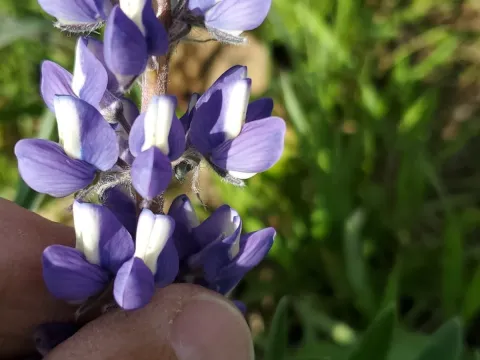
Wyeth lupine
Lupinus wyethii
Wyeth lupine (Lupinus wyethii) is a perennial herbaceous plant belonging to the Fabaceae family. Native to the mountain regions of Western North America, it is valued for its hardiness and ability to thrive in diverse environmental conditions.
What the section contains
Wyeth lupine
Sowing should take place in early spring, as soon as the soil can be worked. Because the seeds are often hard-coated, scarification is recommended before planting to ensure uniform and rapid germination throughout the field.
The recommended seeding depth is approximately 2–3 cm. Planting in rows with a spacing of 30–45 cm is standard, allowing sufficient air circulation and light penetration to prevent canopy moisture buildup.
Establishment in the first year is typically slow as the plant focuses its energy on developing a deep, strong taproot system. Once established, the perennial nature of the plant allows it to return vigorously every season.
Proper inoculation with specific rhizobial bacteria is crucial for high-performance plantings. This ensures the plant effectively fixes atmospheric nitrogen, which benefits both the lupine and the subsequent crops in a rotation cycle.
This species is highly adaptable to well-drained, porous soils. It prefers soils with a neutral or slightly acidic pH, and it performs poorly in compacted or waterlogged ground where roots may suffer from asphyxiation.
Wyeth lupine is remarkably drought-tolerant once established, thanks to its extensive root structure. It thrives in full sun exposure and is well-adapted to the high-altitude environments typical of its native range.
As a legume, it does not require high levels of soil nitrogen. Excessive nitrogen fertilization can actually hinder the development of the root nodules and decrease the plant's natural efficiency in nitrogen fixation.
Climatic requirements are moderate, with the plant being highly resistant to cold temperatures and frost. However, it requires a sufficiently long growing season to produce mature seeds if grain production is the target.
Cultural management should focus on weed control during the seedling stage. Once the plants are established, their canopy is usually thick enough to suppress most competing weeds, reducing the need for intensive field maintenance.
Anthracnose is a primary concern for Wyeth lupine, especially in humid conditions. It manifests as dark, sunken lesions on stems and petioles, which can lead to plant collapse if the infestation is severe.
Powdery mildew represents another common threat, forming white, dust-like patches on leaves. This disease is most prevalent in periods of warm days and cool nights, leading to reduced photosynthetic activity.
Insects like the lupine aphid can colonize the growing tips of the plant, causing stunted growth and misshapen leaves. Management usually involves monitoring populations and applying integrated pest management strategies.
Root-knot nematodes can also be a hidden threat, particularly in sandy soils. They damage the root nodules, which reduces the plant's nitrogen-fixing capacity and overall vigor, leading to yellowing and premature drying.
Integrated control programs are the most effective way to manage these threats. Combining crop rotation, the use of certified healthy seeds, and proper site drainage significantly reduces the incidence of both pests and pathogens.