
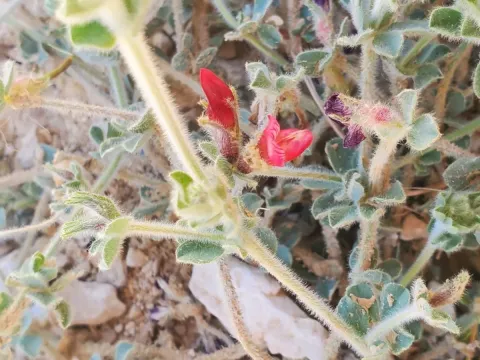
Woolly bird's-foot trefoil
Lotus lanuginosus
The Woolly bird's-foot trefoil (Lotus lanuginosus) belongs to the Fabaceae family. It is a perennial legume characterized by dense trichomes covering its stems and leaves, providing high drought resistance in arid environments.
What the section contains
Woolly bird's-foot trefoil
This species thrives in well-drained, sandy, or rocky soils. It is particularly valued for its ability to persist in low-fertility conditions where other conventional forage crops would struggle to establish or produce significant biomass.
Botanically, the plant is optimized for high-light conditions and warm temperatures. Its symbiotic relationship with specific strains of rhizobia enables it to perform efficient nitrogen fixation, which is crucial for soil improvement in marginal lands.
In terms of agricultural management, the plant requires minimal input if the site provides good drainage. It is commonly included in seed mixes designed for the revegetation of eroded slopes or dry pastures.
The lifecycle of this plant is adapted to Mediterranean-like climates where it benefits from late winter rains and summer heat. It displays moderate cold tolerance once established, though seedlings require protection during extreme frost.
Root rot fungi represent the primary threat to this crop, particularly when cultivation occurs in soils that fail to drain excess water, leading to a hypoxic environment for the roots.
Insects like the clover root curculio are significant pests that cause damage to the nitrogen-fixing nodules, effectively reducing the plant's growth vigor and overall health.
Foliar diseases, such as various rusts, may appear during humid seasons, necessitating monitoring and, if required, the application of appropriate fungicidal treatments.
Competition from aggressive invasive weeds can significantly reduce the establishment rate of the stand, making early-stage mechanical weeding a necessary practice.
Integrated pest management protocols, including regular field scouting and the use of certified healthy seeds, are recommended to maintain the long-term viability of the legume stands.