
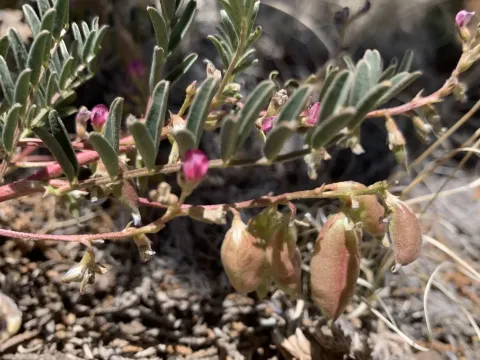
Wooton's locoweed
Astragalus wootonii
Wooton's locoweed (Astragalus wootonii) is a perennial member of the Fabaceae family. It is a well-known species native to the arid environments of the Southwestern United States and Northern Mexico.
What the section contains
Wooton's locoweed
The plant thrives in well-drained, sandy, or rocky soils. It is highly adapted to extreme xerophytic conditions, where moisture retention is minimal and soil types are porous.
Climate requirements for this species include high solar irradiance and significant temperature variations between day and night. It is not suitable for cultivation in humid or tropical regions.
Agronomic management of this species focuses on maintaining open space to prevent fungal pathogens. The plant does not require high levels of fertilization due to its nitrogen-fixing capabilities.
A critical characteristic of this plant is its classification as a locoweed. It contains swainsonine, which is toxic to livestock and can lead to irreversible neurological damage if ingested.
Powdery mildew is a common fungal threat to Wooton's locoweed. It manifests as a white, powdery coating on the foliage, significantly reducing the photosynthetic efficiency of the plant.
Root rot, primarily caused by excessive soil moisture and poor drainage, remains the most lethal threat. Once established, root pathogens rapidly degrade the health of the entire plant system.
Insects like weevils frequently attack the developing seed pods. These pests can cause significant losses in yield for those studying or maintaining populations of this specific Astragalus species.
Aphids tend to congregate on young, tender growth during the early spring. Their feeding habits cause leaf curling and stunt the overall vertical development of the plant.
Soil-borne nematodes are another significant pest concern. By creating root lesions, they weaken the plant and increase its vulnerability to secondary infections from other soil pathogens.