
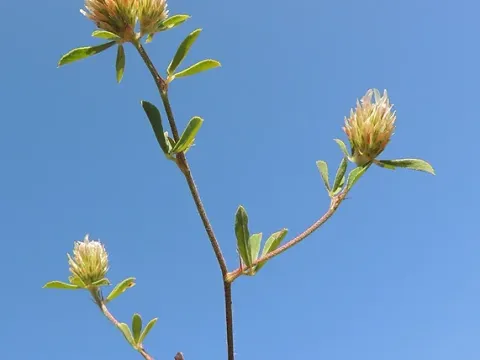
Narrow-leaved clover
Trifolium tenuifolium
The narrow-leaved clover is a perennial herbaceous plant belonging to the Fabaceae family. In agricultural practices, sowing this crop is typically performed in early spring once soil temperatures reach 8–10 degrees Celsius, ensuring uniform and rapid germination of the seeds.
What the section contains
Narrow-leaved clover
It is critical to manage sowing depth carefully, keeping it within 1–2 centimeters, especially in light soil types. The optimal seeding rate depends on seed purity and germination capacity, generally ranging from 10–12 kg per hectare when using standard drill sowing methods.
Compacting the soil immediately after sowing is an essential step to ensure proper contact between seeds and the soil profile. This technique promotes capillary water movement toward the seedbed, preventing the dehydration of young seedlings during the delicate early stages of development.
In regions with mild winters, late-autumn sowing may be practiced, though it requires precise timing to prevent seeds from germinating before the onset of permanent frost. However, most agronomists prefer early spring sowing to utilize soil moisture stored from winter snowmelt.
The crop exhibits relatively slow initial growth, which necessitates proactive weed control measures. Using cover crops or proper spacing helps minimize competition from unwanted vegetation, allowing the clover to establish a strong root system during its first weeks of life.
Narrow-leaved clover thrives in open areas with high solar exposure, as it is a light-demanding species. It is well-adapted to moderately arid conditions, making it a viable candidate for regions with limited rainfall where other clover species might suffer from heat stress.
Soil requirements include well-drained loamy or sandy soils with a neutral to slightly acidic pH level. The plant is highly sensitive to waterlogging, meaning fields with high groundwater tables or poor drainage are unsuitable for its cultivation and can lead to rapid stand depletion.
For successful growth and productivity, soils should be rich in phosphorus and potassium. Applying mineral fertilizers during early growth stages stimulates root system development and enhances the plant's symbiotic relationship with nitrogen-fixing bacteria, reducing the need for synthetic nitrogen.
This species shows high winter hardiness, capable of enduring significant temperature fluctuations in early spring. It performs well in cold-winter regions provided there is a reliable snow cover, which serves as a natural insulator to protect the roots from deep ground freezing.
Strict crop rotation rules must be observed, with at least a 4–5 year interval before returning clover to the same field. This practice is vital to prevent the buildup of soil-borne pathogens specifically targeting legumes and to maintain high yields throughout the crop's lifecycle.
The yield of narrow-leaved clover is highly dependent on seasonal weather patterns and soil fertility levels. Under favorable conditions with adequate rainfall during the spring and summer, the crop is capable of producing two full harvests of high-quality green biomass per season.
The green mass is prized for its high nutritional value, featuring high protein content and essential amino acids, making it an excellent component for livestock feed. Timely harvesting is essential to capture the peak nutrient density before the plant progresses too far into the reproductive stage.
To maximize seed production, the first growth cycle is often left to mature. The effectiveness of pollination by local insect populations, particularly bees, significantly influences bean setting and the overall seed yield gathered from the field during the harvest period.
Modern breeding programs have significantly improved the productivity of this clover compared to its wild counterparts. By utilizing intensive management practices, including targeted fertilization, farmers can maintain stable and productive stands for 3–4 years of regular use.
The regrowth rate of the clover after harvesting is moderate, requiring careful planning of grazing or mowing cycles. Allowing the crop to stay on the field for too long leads to stem lignification, which decreases overall feed quality and nutrient digestibility for animals.
Like many other legumes, narrow-leaved clover is susceptible to fungal diseases such as rust and anthracnose, especially in conditions of high air humidity. Preventive management includes selecting resistant cultivars and maintaining optimal stand density to ensure proper airflow.
Pests, such as the clover weevil and various aphid species, can cause significant damage to crops by attacking foliage and reproductive organs. An integrated pest management strategy involving biological controls is recommended to maintain insect populations below economic injury levels.
Root rot represents a severe threat when agronomic standards are ignored, particularly in fields with poor drainage. This disease often leads to the loss of individual plants, resulting in empty patches that reduce stand density and encourage the encroachment of aggressive weeds.
Seed damage by insects during maturation requires constant vigilance from agronomists during the seed production phase. Regular phytosanitary monitoring allows for early detection of infestations, enabling localized interventions without the need for broad-spectrum chemical applications.
Poor management of the forage stand, such as overgrazing, weakens the plants and leaves them vulnerable to disease. Implementing a sustainable grazing or mowing schedule is a key factor in ensuring the long-term health and longevity of the crop in any farming system.
Harvesting for hay is conducted at the start of the flowering phase when the plant's nutritional concentration is at its peak. Using modern mower-conditioners accelerates the drying process and helps preserve the leaves, which are the most protein-rich part of the plant.
During the hay-making process, excessive turning should be avoided to prevent the shedding of small leaves. The moisture content of the finished hay at the time of storage should not exceed 15–17 percent to prevent microbial growth and potential fire risks.
Seed harvesting is performed using either direct or two-stage methods, depending on prevailing weather conditions and the uniformity of maturity. It is critical to harvest before the pods crack open, as losses due to seed shattering can significantly impact the final yield.
Post-harvest processing involves cleaning, drying, and grading the seeds to meet required agricultural standards. High-quality seed material is essential to ensure high vigor and uniform germination when planted in the following growing season.
Crop residues remaining after harvest serve as valuable organic matter when incorporated into the soil. This practice improves soil structure and promotes humus accumulation, which is a key component of sustainable agricultural systems aimed at preserving soil fertility.