
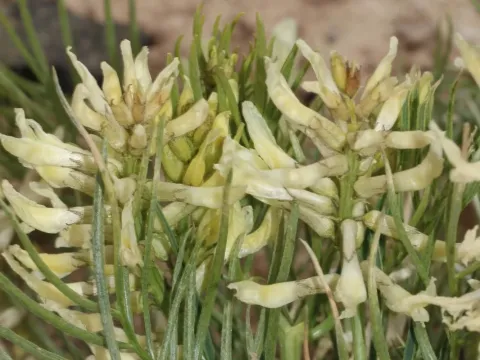
Narrow-leaf milkvetch
Astragalus pectinatus
Narrow-leaf milkvetch (Astragalus pectinatus) is a perennial legume species native to the arid grasslands of North America. It is recognized for its unique, comb-like leaf structure and its role as a hardy forage plant in range environments.
What the section contains
Narrow-leaf milkvetch
The seeds of this species have a hard, impermeable seed coat, which necessitates mechanical or chemical scarification to ensure uniform and rapid germination. Sowing is typically performed in late autumn or early spring to utilize natural stratification processes.
Seeding depth should be kept shallow, generally around 1 to 2 centimeters, to allow the small seedlings to emerge without exhausting their seed reserves. Firming the soil after planting is essential to ensure adequate seed-to-soil contact for water absorption.
Establishment is notoriously slow during the first growing season as the plant invests significant energy into developing a deep taproot. Farmers must control weed competition during this critical phase to ensure the survival of the stand.
Row spacing should be optimized based on the intended use of the crop, whether for seed production or permanent pasture. As a long-lived perennial, careful initial setup prevents the need for frequent reseeding in challenging environments.
Astragalus pectinatus is exceptionally drought-tolerant and thrives in semi-arid climates where annual precipitation is low. Its deep root system allows it to access subsoil moisture during periods of prolonged heat and dry weather.
The crop prefers well-drained, sandy or loamy soils. It has a high tolerance for diverse soil conditions but performs poorly in heavy, saturated clays that are prone to waterlogging and compaction.
Exposure to full sunlight is critical for the development of robust vegetative growth. Shaded areas significantly reduce the plant's photosynthetic efficiency and can lead to thin, weak stands.
It is remarkably resistant to cold temperatures, surviving dormant through harsh winters. The plant's ability to fix atmospheric nitrogen also reduces the need for external nitrogen fertilization in established stands.
pH levels should ideally remain near neutral or slightly alkaline. While the species is adapted to survive on selenium-rich soils, it generally does not require specialized mineral supplementation in agricultural settings.
Root rot and crown diseases are the primary threats when soil moisture levels exceed the plant's tolerance threshold. Ensuring proper drainage is the most effective preventative measure against these fungal pathogens.
Seed-feeding insects, such as weevils and certain beetle larvae, can cause significant damage to reproductive structures. Monitoring these populations during the flowering and pod-filling stages is essential for seed producers.
Invasive weeds pose a substantial competitive threat during the establishment year. Without proper management, faster-growing weeds can easily overtop and starve the young milkvetch plants of light.
Overgrazing during the active growing season can deplete the plant's root reserves, making it susceptible to disease and winter injury. Implementing rotational grazing patterns helps sustain the longevity of the pasture.
General integrated pest management practices should be followed to maintain ecosystem health. Avoiding excessive chemical pesticide use ensures the preservation of beneficial insects and soil microbial life.