
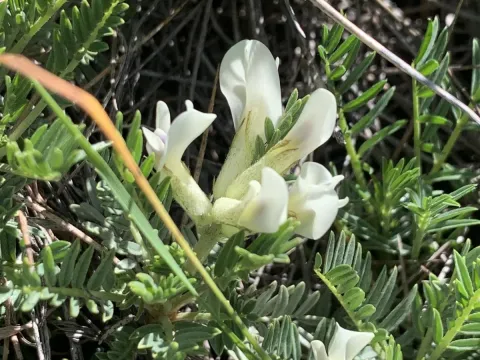
Narrow-leaved milkvetch
Astragalus angustifolius
The narrow-leaved milkvetch (Astragalus angustifolius) is a perennial herbaceous plant belonging to the Fabaceae family, recognized for its exceptional resilience and adaptation to harsh environments.
What the section contains
Narrow-leaved milkvetch
Originating from the mountainous and rocky terrains of Southern Europe, this species has evolved to thrive in nutrient-poor soils where other crops struggle to survive.
Botanically, it features a deep taproot system that enables the plant to access moisture from deep soil layers, making it highly drought-tolerant and effective in erosion control.
The plant requires well-drained, alkaline, or neutral soils and cannot tolerate waterlogged conditions, which lead to root asphyxiation and rapid decline of the stand.
Full sun exposure is essential for the healthy growth and development of this species; any significant shade will result in reduced biomass and inhibited reproductive capacity.
Sowing should be performed in early spring to utilize seasonal soil moisture, which is critical for the germination of the relatively small and hard-coated seeds.
Pre-sowing treatment of seeds, such as scarification or stratification, is recommended to ensure uniform and high-percentage germination across the field.
A sowing depth of 1–2 cm is optimal, as deep burial significantly hinders the emergence of the tender seedlings that develop slowly during the initial establishment phase.
Row spacing should be maintained between 30 cm and 45 cm to allow for mechanical weeding, which is vital during the first year to prevent competition from invasive weed species.
While the plant is a nitrogen fixer, ensuring the presence of correct Rhizobium strains in the soil is beneficial for maximizing the establishment and long-term health of the crop.
The yield of Astragalus angustifolius is primarily evaluated by its dry matter production, which, while lower than traditional forage legumes, offers superior quality in harsh, dry climates.
Harvesting for biomass or seed production is typically performed once the plant has reached its peak maturity, usually in the late summer months.
Effective biomass management requires precise timing to ensure the plant has enough energy reserves in its root system for overwintering and regeneration in the following spring.
The seed yields depend heavily on pollinator activity, thus establishing the crop near natural areas with high insect diversity is a recommended strategy for seed production.
Regular maintenance of the stands can ensure stable yields over several years, as the species is known for its longevity and ability to maintain stand density over time.
The primary threats to Astragalus angustifolius include root rot diseases, which often occur due to poor drainage and high humidity levels during the growing season.
Pests such as pea weevils and various leaf-eating beetles can cause aesthetic and physiological damage, potentially reducing the overall vigour of the plants.
Fungal infections, such as rusts and powdery mildew, may manifest under conditions of stagnant air and excessive humidity, requiring careful management of plant density.
Integrated pest management strategies are preferred, focusing on crop rotation and maintaining soil hygiene to prevent the buildup of soil-borne pathogens.
- Strict adherence to irrigation schedules to avoid waterlogging.
- Monitoring for insect activity during the spring development phase.
- Implementation of controlled weed management to ensure optimal aeration.