
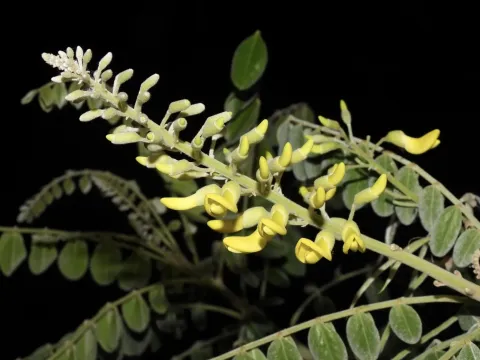
Necklace pod
Sophora tomentosa
The Necklace pod, known scientifically as Sophora tomentosa, is a perennial legume often propagated from seeds in nursery conditions.
What the section contains
Necklace pod
Seeds have a hard seed coat that requires scarification before planting to ensure uniform and efficient germination rates.
Sowing should be performed in a light, well-draining potting mix, maintaining consistent warmth and moisture during the initial phase.
Seedlings are typically transplanted to their permanent outdoor location once the threat of frost has completely passed in spring.
When sowing directly outdoors in suitable climates, ensure the soil temperature is sufficiently high to prevent rotting of the seeds.
This species thrives in full sun exposure, which is critical for maintaining the dense, silvery-tomentose appearance of its foliage.
It adapts well to a variety of soil types, including sandy and rocky substrates, provided they offer excellent drainage properties.
Sophora tomentosa is highly tolerant of saline conditions and high winds, making it an ideal choice for coastal landscaping projects.
Watering requirements are moderate; the plant is drought-tolerant once established but needs regular hydration during its early growth stages.
While adapted to tropical and subtropical climates, the plant may require protection from extreme cold in temperate regions during winter.
The primary value of the Necklace pod lies in its ornamental utility and its capacity for soil stabilization in erosion-prone areas.
It provides significant ecological benefits by supporting local pollinator populations with its characteristic yellow, pea-like flowers.
Due to the presence of secondary metabolites, the foliage and seeds are not suitable for livestock grazing or fodder purposes.
The plant is highly regarded in landscape architecture for its aesthetic appeal, particularly in arid or coastal garden designs.
No large-scale agricultural crop yield is expected, as its cultivation is strictly focused on environmental restoration and horticulture.
Sophora tomentosa is generally a hardy plant, though it may occasionally be susceptible to fungal infections in overly humid environments.
Insect pests, such as aphids and scale insects, may target the younger leaves and stems, especially during seasonal transitions.
- Monitor the plant frequently for signs of mite or aphid activity.
- Use pruning to increase airflow and remove any infested or dead plant material.
- Apply environmentally friendly insecticidal soaps if pest populations exceed threshold levels.
Root rot is a major threat that usually stems from waterlogged soil, emphasizing the need for proper site selection and soil amendment.
Maintaining proper spacing between individual plants is essential to prevent the spread of foliar pathogens in dense plantings.