
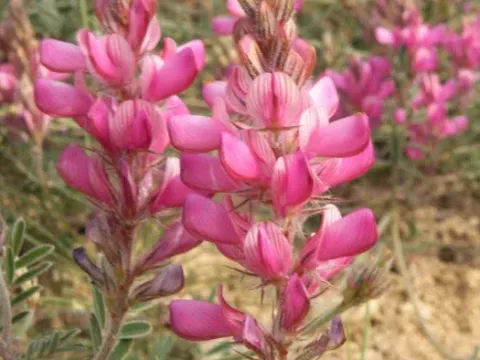
Narrow-rooted sainfoin
Onobrychis stenorhiza
Narrow-rooted sainfoin, a member of the Fabaceae family, is typically sown in early spring as soon as the soil reaches a workable state. Proper timing ensures the seeds utilize moisture effectively for initial root development.
What the section contains
Narrow-rooted sainfoin
The seeding rate ranges between 60 and 100 kg per hectare, depending on local soil conditions and seed viability. A seeding depth of 2 to 4 cm is generally recommended to ensure strong emergence and seedling vigor.
Cultivation can be done in pure stands or mixed with cereal grasses. Pure stands are preferred when the primary objective is producing high-protein legume hay for livestock consumption.
Seedbed preparation must involve thorough soil loosening and leveling to facilitate even sowing. Post-sowing rolling is highly recommended to improve soil-to-seed contact and enhance germination rates.
In arid regions, early sowing is crucial to allow the root system to reach deeper soil horizons before the intense heat of summer, which ensures crop survival and long-term sustainability.
This crop is a classic xerophyte, possessing remarkable drought tolerance, which makes it ideal for arid and semi-arid agricultural zones. It handles temperature fluctuations well and thrives in open landscapes.
The plant prefers well-aerated black soils or chestnut soils. It is sensitive to soil acidity and requires lime application if the soil pH drops below neutral levels, as acid conditions significantly hinder growth.
The deep-reaching taproot system allows the crop to thrive in environments where other grasses might fail. This biological feature also contributes to soil structure improvement and nutrient cycling within the field.
Sainfoin requires high light intensity for optimal growth and biomass production. It does not tolerate shading from weeds or dense canopies, making weed management essential during the establishment phase.
As a legume, it forms a symbiotic relationship with nitrogen-fixing bacteria, enriching the soil with nitrogen. This reduces the need for synthetic fertilizers and serves as a great predecessor for grain crops.
Powdery mildew is the most prevalent fungal disease, particularly during periods of high humidity. It affects the foliage, reducing both the biomass yield and the nutritional quality of the forage.
Root rot diseases present a significant threat to young stands, especially in poorly drained soils during wet spring seasons. Proper site selection and crop rotation are the primary preventive measures.
Pests like weevils can cause substantial damage to the reproductive organs, negatively impacting seed production. Managing these pests is vital for producers who focus on harvesting seeds for future plantings.
Aphids may infest the vegetative parts of the plant, drawing nutrients and weakening the overall stand. Monitoring field populations is necessary to decide if control measures are required.
Integrating agricultural techniques, such as proper stand management and spatial isolation, helps maintain a lower disease pressure and ensures the longevity of the crop in the field.
Hay harvesting should occur at the beginning of the flowering stage to maximize protein content and overall digestibility. This timing provides the most nutrient-dense forage for livestock.
Drying the crop requires gentle handling to retain the leaves, which are the most nutrient-rich part of the plant. Proper ventilation and field drying techniques are essential to maintain quality.
The crop is also excellent for green chop, providing a high-protein supplement throughout the season. Unlike some other legumes, it does not cause bloat in ruminant livestock.
Seed harvesting is conducted when the majority of the pods turn brown. Precision is required during mechanical harvesting to minimize pod shattering and ensure maximum recovery of the seed crop.
Post-harvest residues act as beneficial green manure. Incorporating these residues into the soil adds organic matter and improves the physical and chemical properties of the land for future use.