
Naked-fruit clover
Trifolium gymnocarpon
Description
Growing requirements
Naked-fruit clover (Trifolium gymnocarpon) is a perennial legume species belonging to the Fabaceae family. It is a highly specialized plant adapted to thrive in arid and semi-arid environments where other traditional forage crops often fail to establish.
The native distribution of this species is largely confined to the western regions of North America. It is commonly found in rocky slopes and high-desert terrain, showcasing a remarkable evolutionary adaptation to low water availability and extreme temperature fluctuations.
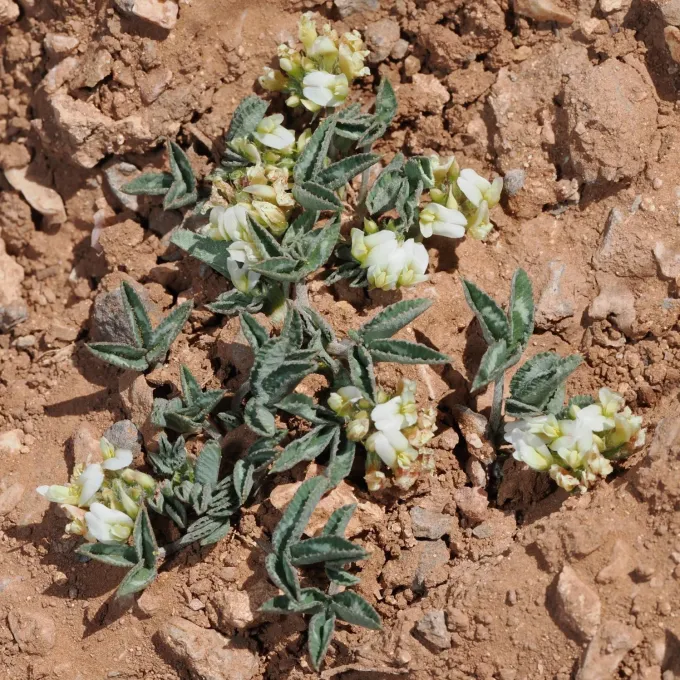
From a botanical perspective, the plant is distinguished by its low-growing habit and characteristic hairless pods. It produces trifoliate leaves and small, distinctive inflorescences that are efficient at attracting local pollinators, ensuring reproductive success in harsh habitats.
Regarding soil and climatic requirements, this clover demands well-drained, porous substrates. It performs best in soils with high mineral content and cannot tolerate saturated conditions, which can lead to root diseases and rapid decay of the taproot system.
Its primary agricultural and ecological roles involve soil stabilization and nitrogen fixation in impoverished soils. While not a conventional high-yield crop, it serves as a valuable genetic resource for breeding drought-tolerant forage varieties and as a component in sustainable range management programs.